Natural Resource Tokenization: Types, Use Cases & Solutions
Listen to the Audio :
Natural resources have always been among the world’s most valuable assets. Oil, gas, minerals, water rights, carbon credits, forests, and agricultural commodities drive global economies, yet access to these assets has traditionally been limited, inefficient, and difficult to trade. This is where Natural Resource Tokenization is changing the game in 2026.
Through the tokenization of natural resources, physical assets can be converted into blockchain-based digital tokens, making ownership more accessible and easier to trade. As blockchain for natural resources grows, businesses are flocking toward the resource tokenization solutions and building resource asset tokenization platforms for global investment opportunities.
As per an analysis, the tokenization market was presumed to be $5.19 billion in 2026 and expected to touch $13.2 billion by 2030 at a 26.3% CAGR. Recently, Datavault AI and Coppercore announced the tokenization of copper assets, highlighting rising interest in digital asset tokenization for resources. In this blog, we will explore its types, use cases, and global impact.
What is Natural Resource Tokenization?
Natural Resource Tokenization is a process of converting ownership or rights into physical natural assets into digital tokens on the blockchain. These assets can range from, say, oil and gas, minerals, carbon credits, water rights, forest, or even agricultural commodities.
With tokenization of natural resources, these assets, that have historically been hard to trade, are now easy to buy, sell, and manage. By using blockchain for natural resources, every transaction is recorded securely and transparently, reducing paperwork and improving trust.
Businesses are now adopting resource tokenization solutions to improve liquidity and attract global investors. A well-built tokenization of natural resources platform can also enable fractional ownership, allowing multiple investors to own a share of valuable resources.
In simple terms, digital asset tokenization for resources makes physical assets more accessible and efficient in the digital economy.
Explore → Green Energy Tokenization Services
Types of Natural Resource Tokenization
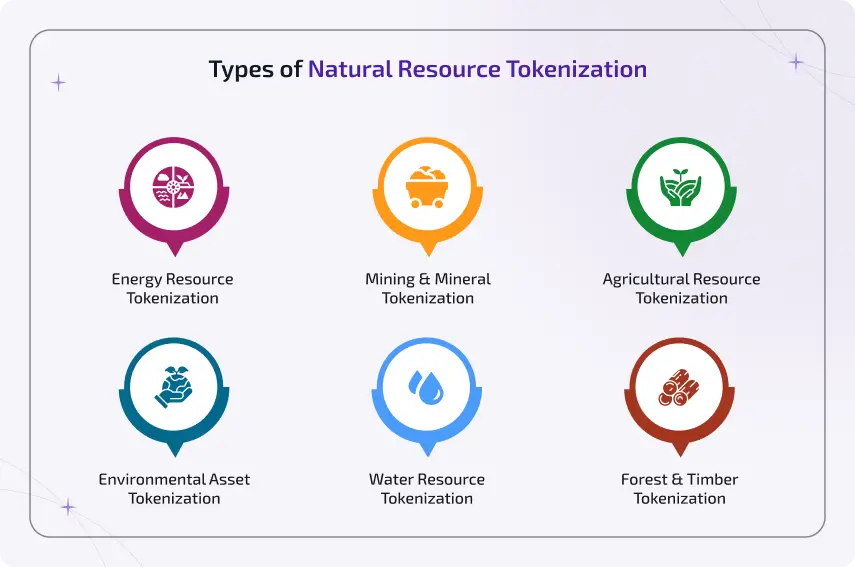
Depending on the industry it depends upon and the type of value for which it is meant, Natural asset digitization can cover an extensive list of physical assets. The big focus of blockchain-based natural asset tokenization is to increase the access to these assets, in the meanwhile, maintain the utility to manage and trade with greater transparency and liquidity.
Natural Resource Tokenization is already enjoying hype in several sub-categories around the world at different stages, as business units test the use-cases available. Here are some of the most common types of environmental asset tokenization being explored today.
Energy Resource Tokenization
Energy stands as one of the greatest arenas where Natural Resource Tokenization is increasingly gaining considerable weightage. Most of the time, it is extremely expensive and complicated to access large energy assets; therefore, tokenizing energy assets would allow for much broader participation by various investors.
Oil reserves can be tokenized and divided into smaller ownership units
Natural gas assets can be linked to revenue or production output
Solar and wind energy projects can offer token-based ownership or profit sharing
Renewable energy credits can also be traded digitally
Investors can participate without buying the full asset
Mining and Mineral Tokenization
Mining assets have always attracted investors, but access has usually been limited. Natural resource tokenization changes that by making mineral-backed investments more accessible.
Gold and silver reserves can be represented as digital tokens
Lithium and copper are becoming popular due to EV and battery demand
Rare earth minerals can be tokenized for future production rights
Revenue generated from mining projects can be shared through tokens
It creates easier access to global investors
Agricultural Resource Tokenization
Agriculture is another area where tokenization of natural assets can make a practical difference. It can help improve funding and create easier access to agricultural investments.
Farmland ownership can be divided into smaller shares
Crops can be tokenized based on future yield
Water rights connected to farms can be tokenized
Livestock or agricultural commodities can also be represented digitally
Farmers can raise funds without relying only on traditional financing
Environmental Asset Tokenization
Assets in the environmental sector are being valued more in line with focus on sustainability. This is in rapid ascendancy as among natural resource tokenization.
Carbon credits can be traded as digital assets
Forest conservation projects can be tokenized
Biodiversity and ecosystem protection projects can attract investors
Reforestation projects can use tokens for fundraising
ESG-focused investors can access sustainable opportunities more easily
Water Resource Tokenization
The limited supply of water makes it a resource of great value across a spectrum of regions. Accordingly, the natural resource tokenization is becoming conducive to water-based assets.
Water rights can be tokenized and traded
Water storage and conservation projects can raise funds through tokens
Infrastructure projects like pipelines or treatment plants can be linked to digital assets
Investors can support projects focused on efficient water management
Forest and Timber Tokenization
The forests are valuable not only for timber but also for preserving carbon. Natural resource tokenization has made these assets easier to monetize.
Timber production rights can be tokenized
Forest ownership can be split into digital shares
Carbon offset value can be tied to forest assets
Conservation and reforestation programs can raise funds more easily
With each step toward digital ownership across different industries, we are indeed witnessing a disruptive natural resource tokenization which incentivizes the future investment, capital raising, and transparency in global resource markets.
Looking to build a natural resource tokenization platform? BlockchainX delivers enterprise-grade solutions. → RWA tokenization development services
How Natural Resource Tokenization Works
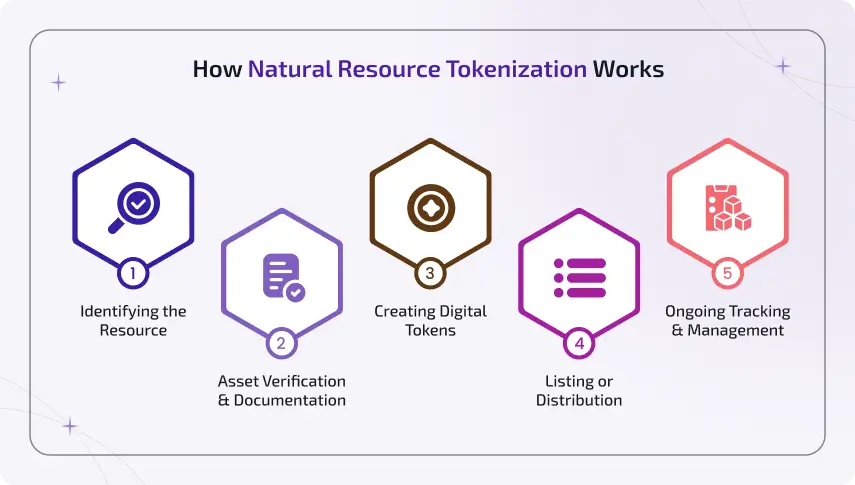
At a simple level, Natural Resource Tokenization is about turning the value or ownership of a physical resource into digital tokens that can be managed and traded on a blockchain. While it may sound technical, the process is actually quite structured. The goal of natural resource tokenization is to make these assets easier to access, more transparent, and more liquid.
Here is how natural resource tokenization usually works step by step.
Identifying the Resource
The most important and primary step is to decide upon that asset that you desire to tokenize and the means by which it can have its value represented.
It could be anything, from oil deposits or minerals, agricultural land, to carbon credits or water rights
The asset is valued according to its market price, ownership, and expected earnings
Legal ownership and usage rights are reviewed before moving forward
This creates the foundation for the tokenization process.
Asset Verification and Documentation
Before creating digital tokens, the resource needs to be verified properly.
Audits are conducted to confirm the asset exists
Ownership records and legal documents are checked
Valuation reports are prepared to support pricing
This step builds trust for future investors.
Creating Digital Tokens
After the ownership is verified, the blockchain will create digital tokens.
Tokens can represent ownership, profit-sharing, or access rights
Smart contracts define how these tokens function
Tokens can be split into smaller units for fractional ownership
This is where digital asset tokenization for resources becomes practical.
Listing or Distribution
After the tokens are created, they are distributed or listed for investors.
Tokens can be sold privately or through a public platform
Investors can buy small or large portions depending on availability
Some tokens can be traded in secondary markets
This improves liquidity and accessibility.
Ongoing Tracking and Management
Once live, the platform continues to manage the asset and token activity.
Blockchain records all transactions transparently
Smart contracts automate payouts or revenue sharing
Asset performance and updates can be tracked in real time
This is where blockchain for natural resources adds long-term value.
In simple terms, natural resource tokenization takes a physical asset, verifies it, converts it into digital ownership, and makes it easier to trade or invest in through a natural resource tokenization platform.
How Tokenization Solves Current Global Problems
One of the main reasons Natural Resource Tokenization is getting so much attention right now is because it solves problems that industries have been dealing with for a long time. In many cases, transactions take time, ownership records are not always clear, and raising funds can be a challenge.
For smaller investors, getting access to these markets has been even harder. This is where natural resource tokenization starts to make a real impact by making these assets easier to manage, easier to trade, and far more transparent.
Improves Liquidity in Illiquid Markets
Many natural resources are valuable but difficult to trade quickly. Selling or transferring ownership often takes time and involves multiple intermediaries.
Tokenizing assets makes them easier to buy and sell
Fractional ownership opens access to more investors
Markets become more active and liquid
This makes large assets more flexible and accessible.
Increases Transparency and Trust
Resource-heavy industries are characterized by disputes over ownership and lack of clear records. Blockchain for natural resources helps create a transparent system.
Every transaction is recorded on-chain
Ownership history becomes easier to verify
Reduces the risk of fraud and manipulation
Solves Funding and Capital Challenges
Many resource-based businesses struggle to raise capital through traditional channels. Resource tokenization solutions provide an alternative.
Companies can raise funds by selling fractional ownership
Investors can participate without large upfront commitments
Funding becomes faster and more global
This can help unlock stalled projects.
Improves Global Access
Natural resource investments have traditionally been limited to institutions or wealthy investors.
Smaller investors can access high-value assets
Markets become more inclusive
Global participation increases
This helps democratize access.
Supports Sustainability and Traceability
The common consumer and regulatory entities request greater transparency about what is sourced and sustainability.
Track ethically sourced materials
Verify carbon credits and environmental projects
Improve ESG reporting and accountability
This makes digital asset tokenization for resources useful beyond investment.
In many ways, Blockchain-based resource tokenization is solving long-standing inefficiencies by making global resource markets more transparent, accessible, and efficient.
Benefits of Natural Resource Tokenization
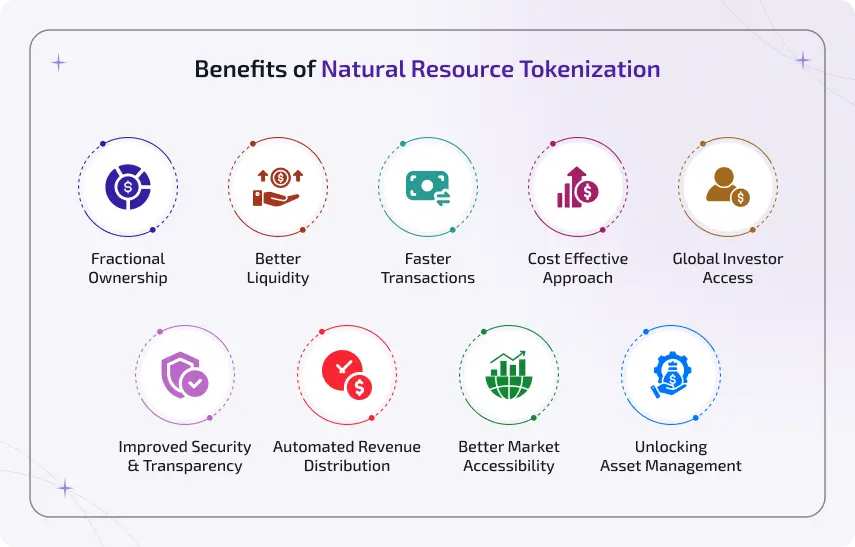
The benefits of Natural Resource Tokenization go far beyond easier trading. It changes the way businesses raise funds, how investors participate, and how assets are managed over time. This is why more companies are exploring natural resource tokenization platforms and resource tokenization solutions in 2026.
Fractional Ownership
Large assets become more accessible when divided into smaller units.
Investors can own part of an oil reserve, farmland, or mining asset
Lowers the capital required for entry
Makes high-priced assets cheaper
Encourages broader participation
This makes investing easier for more people.
Better Liquidity
Traditionally illiquid assets become easier to move.
Assets can be traded faster
Secondary market opportunities increase
Owners can unlock value quicker
Improves asset flexibility
This creates a more active market.
Faster Transactions
Traditional resource deals can take days or weeks.
Smart contracts automate transfers
Reduces settlement time
Speeds up payments and ownership changes
Minimizes delays caused by paperwork
This improves operational speed.
Lower Costs
Managing and trading physical resources often comes with high costs.
Reduces the need for middlemen
Cuts paperwork and administrative effort
Lowers transaction fees
Improves overall efficiency
This can increase profitability.
Global Investor Access
A natural resource tokenization platform can attract investors from anywhere.
Expands fundraising opportunities
Connects businesses with global capital
Reaches a larger audience
Makes investing borderless
This supports business growth.
Improved Security and Transparency
Blockchain for natural resources creates secure digital records.
Transparent ownership tracking
Immutable transaction history
Reduced fraud risk
Better compliance and auditability
This builds confidence.
Automated Revenue Distribution
Revenue sharing can be handled automatically.
Smart contracts distribute profits instantly
Reduces manual calculations
Avoids payment delays
Improves trust among investors
This simplifies operations.
Better Market Accessibility
Investors can access markets that were previously difficult to enter.
Opens access to rare asset classes
Allows smaller investments
Makes niche markets easier to participate in
This increases adoption.
Supports Innovation in Asset Management
Tokenization changes how assets are managed digitally.
Easier tracking and reporting
Real-time visibility into ownership
Better integration with digital finance systems
This helps businesses modernize operations.
Natural resource tokenization introduces a system that is much more effective and transparent for managing and investing in natural resources.
Real-World Use Cases of Natural Resource Tokenization
The real worth of Natural Resource Tokenization can be best understood from use cases. Natural resource tokenization is no more only a theoretical concept; it is already enabling new avenues for efficient management and trade of valuable assets by businesses, investors and Governments. Here are some of the real-world use cases of natural resource tokenization.
Tokenized Carbon Credits
Carbon credits are one of the most talked-about examples of natural resource tokenization today. Companies looking to offset emissions can buy verified digital carbon credits more easily.
Makes carbon credit trading faster and more transparent
Helps verify ownership and avoid double counting
Supports global sustainability efforts
This is making environmental markets more efficient.
Mining and Mineral Investment
Mining companies can use natural resource tokenization to raise funds by offering fractional ownership in mineral reserves or future production.
Investors can own a share in gold, lithium, or copper projects
Mining businesses can access global funding faster
Improves liquidity for mining-related assets
This creates easier access to mining investments.
Oil and Gas Asset Tokenization
Oil and gas reserves are expensive and often difficult to trade. Natural resource tokenization can make these assets more flexible.
Ownership can be divided into smaller units
Revenue-sharing models can be automated
Investors can participate without buying the full asset
This opens energy investments to more people.
Agricultural Land and Crop Financing
Natural resource tokenization can also serve farmers and agribusiness to attract funds or manage resources more effectively.
Farmland can be split into fractional ownership
Future crop yields can be tokenized
Helps farmers access funding more easily
This can improve agricultural financing.
Water Rights and Conservation Projects
Water has increasingly become a vital global resource. Natural resource tokenization could assist better financing and management of it.
Water rights can be traded more transparently
Conservation projects can raise funds through token sales
Improves tracking and allocation of water resources
This helps support better water management.
Forest Conservation and Timber Assets
Forests can be tokenized for both commercial and environmental purposes.
Timber production rights can be represented digitally
Conservation projects can attract ESG-focused investors
Carbon offset value can be linked to forest assets
Thereby, a financial and environmental value can be created.
Renewable Energy Projects
Another expanding area where natural resource tokenization can be used is in renewable energy.
Solar and wind projects can offer token-based ownership
Revenue from energy generation can be shared automatically
Makes green energy investments more accessible
This can accelerate renewable energy adoption.
Through the increasing adoption, natural resource tokenization that started merely as a concept has moved to a variety of sectors in order to develop improved accessibility and efficacy to the natural resource markets.
Future of Natural Resource Tokenization
The future of Natural Resource Tokenization looks very practical. The idea of industries focused on valuable resources is to raise funds in an easier way as well as to increase transparency applicable to smooth trading. While industries like mining, energy, agriculture, water, and environmental projects are beginning to give close attention to the natural resource tokenization subject.
Increased adoption is now a virtual inevitability as businesses begin to recognize the potential advantages of natural resource tokenization.
More companies may start tokenizing assets like minerals, oil reserves, and farmland
Fractional ownership could make high-value assets easier for smaller investors to access
Trading these assets may become faster and more flexible
Smart contracts could simplify payments and revenue sharing
Carbon credits and other sustainability-focused assets may become more common in tokenized markets
Clearer regulations may help businesses adopt natural resource tokenization with more confidence
In the coming years, natural resource tokenization may become a more common way to own, trade, and invest in real-world natural assets.
Natural Resource Tokenization Services with BlockchainX
We at BlockchainX enable businesses to transform physical assets to digital opportunities through blockchain for natural resources. Our dedicated team works hand-in-hand with businesses across sectors of energy, mining, agriculture, water, and environmental markets to implement practical and scalable resource tokenization solutions.
From planning and legal structuring to blockchain development and platform launch, we handle the complete process. We build secure natural resource tokenization platforms that make ownership, trading, and asset management easier and more transparent.
With our expertise in blockchain for natural resources, businesses can improve liquidity, attract global investors, and simplify transactions. Whether it is the tokenization of natural resources like carbon credits, minerals, or farmland, BlockchainX helps create reliable digital asset tokenization for resources tailored to real business needs.
Start Tokenizing Your Natural Resource — Get a Free Platform Demo
Conclusion
Natural resources have always been valuable, but the way they are bought, sold, and managed has often been slow and complicated. This is why natural resource tokenization has really started to gain momentum, making it easier for businesses to monetize such resources as oil, mineral rights, carbon credits, land and water rights.
As natural resources get tokenized, their ownership can be fractionalised, trades can become easier to complete, and global access for investors can broaden. Using blockchain for natural resources also brings more transparency and reduces the need for lengthy manual processes.
In simple terms, Natural Resource Tokenization is making global resource markets easier to access, easier to manage, and much more efficient for businesses and investors alike.