Energy Tokenization: A Comprehensive Guide for 2026
Listen to the Audio :
Energy tokenization is redefining how the digital world owns, trades, and finances renewable energy. By tokenizing energy assets such as solar farms, wind projects, carbon credits, and other energy infrastructure projects, organizations can unlock doors to much broader investment opportunities, access controls, and liquidity mechanisms for global energy markets.
According to the recent reports from the International Energy Agency, the global energy investment sector is set to hit $3.4 trillion in 2026 and is projected to expand even further in the future as the energy transition truly holds the potential to make a significant impact in the energy sector.
Well, this blog covers the fundamentals, real-life applications, future outlook, and the growing importance of energy tokenization in detail.
What is Energy Tokenization?
As the name implies, energy tokenization is the process of converting both renewable and non-renewable energy sources into digital assets on a blockchain platform. This may represent resources like carbon credits, electricity, and energy-related digital collectibles.
Additionally, physical infrastructures like wind turbines, solar panels, and other energy assets can also be tokenized under the tokenization process. The digital tokens here are transparent, secured, and more tradable, representing the ownership rights and value of a certain amount of energy units. For example, 1 digital token represents the value of 1 kilowatt hour (kWh) of electricity, which is generated from wind or solar power.
Why Does Energy Tokenization Matter Now?
Before the arrival of energy tokenization, only a few individuals could participate in the trading process. But now it has paved the way for green energy to be more investable, allowing smaller investors to trade renewable energy projects through fractional ownership.
The tokenization in the energy sector enables peer-to-peer trading, allowing investors to directly trade, manage, and sell energy sources via blockchain-based tokens, making it more democratic.
Energy tokenization matters most in innovative funding models by supporting renewable energy projects like decentralized finance platforms and crowdfunding.
Tokenization reduces the entry barriers and allows investors to trade on secondary markets with greater flexibility.
It provides an accurate record of tracking renewable energy sources and carbon credits by facilitating environmental compliance.
The streamlined process of a tokenized energy asset matters the most by automating energy project financing from fundraising to asset management.
How Energy Tokenization Works in Practice
How Energy Tokenization Works in Practice
Energy Asset Selection
Select solar, wind, power plant, or turbine assets with measurable capacity and revenue potential.
Reliable project
Capacity value
Asset-backed share
Well, it’s important to have a basic knowledge and idea of how energy assets work in the real world. Below is a simple step-by-step procedure of the workflow of energy tokenization services from energy asset identification to trading in detail.
Selecting the Energy Asset
The first step in the energy tokenization process is to choose a reliable energy project, like solar and wind, or energy infrastructures like power plants and wind turbines. Here, the value of each asset is based on its capacity and potential revenue. However, the value of each token in this process determines a specific portion of that particular asset.
Legal and Regulatory Frameworks
Now, the chosen asset will be verified, assessed, and structured to determine whether it can be represented as a digital token. Then, the asset valuation will be performed; say, for example, 1 digital token will be represented in the value of 1 kWh of electricity or a share in the project.
Once done, the asset will be taken to adhere to the energy regulations and compliance to check and make sure the investment is safe and secure without any interference.
Creation of Token
The next step is to create the tokens. Start defining the token types by choosing the best blockchain networks for tokenization like Polygon, Ethereum, and Solana. Here, a digital token is minted on a blockchain network using smart contracts, and each token is made to represent a fractional share of ownership of the original asset.
Smart Contracts & Token Distribution
Once the tokens are crafted with smart contracts, they automate processes like handling the ownership, revenue distribution, compliance checks, and more. Then, the digital tokens will be distributed on a marketplace or a platform, from which investors or traders can trade them easily and securely. Here, the blockchain technology will provide enhanced transparency and security to investors by recording each transaction on a public ledger.
Management & Tracking
After the investment, token holders can use the digital tokens to trade or sell or even redeem them from project revenues. After that, the token can be tracked in real time using IOT sensors to know its performance metrics, impact on the environment, and other details.
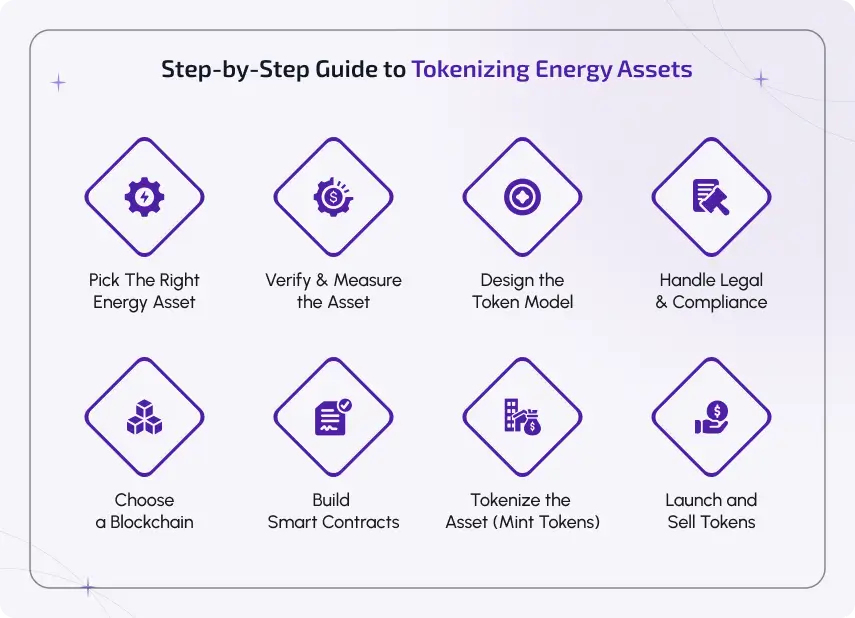
Step-by-Step Process to Tokenizing Energy Assets
This guide provides simple steps for tokenizing energy assets, helping companies in raising capital while advancing sustainable energy projects.
Step 1: Pick the Right Energy Asset
The initial step is to analyze the market demand and select an ideal energy resource that needs to be tokenized, such as carbon credits, solar, wind, or batteries. Make sure the asset is quantifiable, valuable, and appropriate for tokenization and long-term investor trust.
Step 2: Verify & Measure the Asset
Use IoT devices, smart meters, and third-party audits to measure energy production precisely. Verified data ensures that tokens represent real, trackable energy value and increases transparency and trust.
Step 3: Design Tokenomics Model
Clearly define the token’s type, supply, value, and utility. Choose whether tokens stand for carbon credits, revenue shares, or energy units to attract users and ease adoption across various global markets.
Step 4: Handle Legal & Compliance
Ensure to follow local KYC/AML regulations, securities, and energy laws. Legal compliance enables a smooth, token distribution process, protects your enterprise from unnecessary fines, and tends to increase investor credibility.
Step 5: Choose a Blockchain
Choose a scalable, safe blockchain network with low operational costs and robust ecosystem support. Well-liked options, such as Solana, Polygon, or Ethereum, ensure reliability and ease of adoption for users.
Step 6: Build a Smart Contract
Build a smart contract to control data integration, token minting, transfers, and rewards. Perform security audits to ensure smooth operational flow, prevent vulnerabilities, and safeguard funds.
Step 7: Tokenize the Asset
The verified asset is converted into digital tradeable tokens that represent either energy generation or a share of the underlying asset. These tokens are securely owned within the blockchain ecosystem.
Step 8: Launch & Sell Tokens
After token issuance, the tokens are launched for public sale through approved investment channels and trading platforms. Effective fundraising techniques, document transparency, and clear token utility can encourage investor engagement and long-term growth.
Regulatory Landscape of Energy Tokenization in 2026
Regulatory certainty has become a major determinant in the growth of energy tokenization. Clear licensing control promotes the sustainable development of tokenized energy ecosystems worldwide. Here are some of the leading jurisdictions shaping the legal sector at present.
European Union
Standard regulatory framework - Markets in Crypto-Assets
The EU stands at the forefront of energy tokenization standards with its MiCA, which offers regulatory clarity for tokenized assets and energy projects. The EU Taxonomy Regulation further supports the green energy adoption and regulation
UAE
Standard regulatory framework - VARA, ADGM & DIFC
The UAE has established itself as a leading tokenization hub for the energy industry, supported by core regulatory sandboxes such as ADGM, DIFC, and Dubai’s VARA system. Through this framework, the UAE offers clear regulatory pathways, investor protection, and actively promotes the development of digital energy assets and real-world asset projects
United States
Standard regulatory framework - Securities and Exchange Commission
Energy tokenization in the US operates within established regulatory frameworks, primarily overseen by the jurisdiction of the SEC. Token issuers must either register their offerings or utilize exemptions such as Regulation D or Regulation A+. Also, as the regulatory environment remains decentralized, tokenized energy commodities may be subjected to CFTC oversight
Singapore
Standard regulatory landscape - Monetary Authority of Singapore (MAS)
The MAS framework of Singapore regulates tokenized energy assets under its Digital Payment Token and Capital Markets Services systems, offering legal certainty for security tokens. The country’s Project Guardian Initiative further supports the development of real-world asset tokenization, including energy-related infrastructure projects
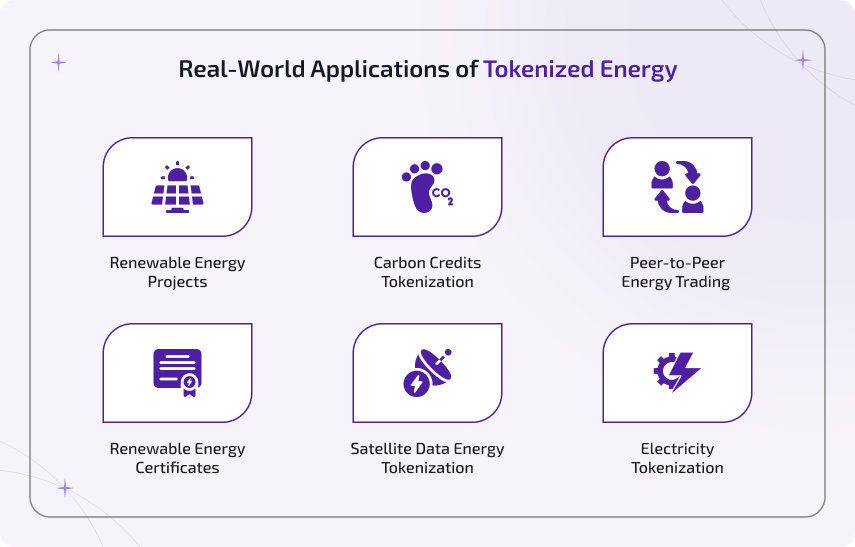
Real-World Applications of Tokenized Energy
The energy tokenization market is witnessing momentum in the Web3 landscape due to growing blockchain adoption and innovation across energy sectors. According to recent statistics, the global energy trading market is projected to grow from USD 2.61 billion in 2026 to USD 31.8 billion by 2035 at a CAGR of 32% approximately. Explore the key applications mentioned below.
Renewable Energy Projects
Tokenization enables large-scale solar power plant projects and wind installations to be digitized into tradable tokens that represent fractional ownership and automated revenue sharing based on actual energy output. This offers renewable energy investments to be more accessible to a wide range of investors.
Carbon Credits
Renewable energy projects often generate carbon credits, and they are tokenized on a blockchain. Generally, carbon credit tokenization allows for more efficient and transparent trading of these credits, which are often linked to renewable energy projects or energy efficiency measures. Here, users will be able to access the simplified version of the carbon regulation compliance.
Peer-to-Peer Energy Trading
Residents in localized microgrids with high-scale electricity can sell it directly to their neighbourhood via blockchain-backed energy platforms. Here, tokens represent renewable energy units, allowing energy production, ownership rights, and settlements to be transparent and direct trading without the dependency on centralized intermediaries.
Renewable Energy Certificates
By bringing renewable energy certificates on-chain, renewable energy tokenization enables traders and energy producers to acquire a traceable record of the energy production level of renewable sources. This reduces the potential risk of double-counting and eases the overall auditing system flow, improving trust across energy markets.
Satellite Data Energy Tokenization
This is one of the potential use cases of the energy tokenization process, where satellite data is used to track and verify the renewable energy asset. By leveraging blockchain technology, energy tokenization will provide improved transparency, liquidity, and accessibility in trading and ownership.
Electricity Tokenization
Electricity tokenization represents units of electricity as digital tradeable tokens, creating a traceable and efficient trading environment for energy resources. It supports every transaction with enhanced transparency, ownership control, and consumption in a real-time market ecosystem.
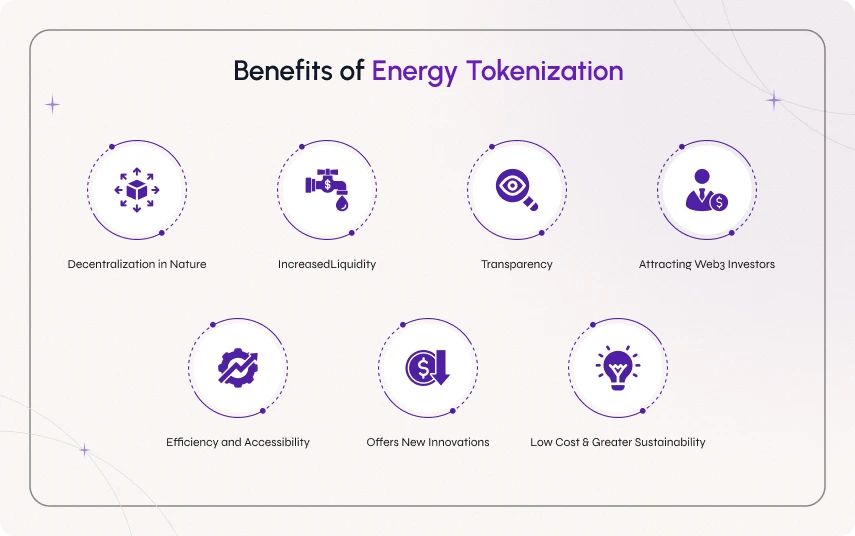
Benefits of Energy Tokenization
Decentralization in Nature
Energy tokenization supports peer-to-peer networks, enabling investors or traders to trade energy assets directly with each other, bypassing the traditional energy intermediaries or any other third parties. Here, every transaction is recorded immutably on a blockchain platform, ensuring safe trading with the elimination of fraudulent activities.
Enhanced Liquidity
The conversion of energy assets into digital tokens on a blockchain network makes the assets more tradable and accessible on various platforms. This increases market liquidity, enabling a wide range of investors to participate in the trading process easily. However, increased liquidity can lead to faster funding cycles for energy projects.
Transparency
The energy tokenization process increases transparency by using blockchain technology. It provides an immutable record of ownership and transactions for the energy assets, enhancing the traceability of the tokens. This helps investors to track the relevant data and thus create trust among them.
Web3 Investor Attraction
Since energy tokenization breaks the investment barrier, it allows a wider range of investors to take part in the green energy ecosystem. Eventually, this reduces the capital required for small investors. Thus, a huge number of Web3 investors can unlock new opportunities and boost the network performance.
Efficiency & Accessibility
The use of smart contracts in energy tokenization cuts down the time and reduces costs by automating the payment, settlement, and regulatory compliance processes. This makes the platform handy for energy investors and enables them to invest in the energy market by having a fractional ownership of energy projects.
Low Cost & Greater Sustainability
As energy tokenization reduces the usage of paperwork and third parties or intermediaries, it reduces operational expenses and lowers the administrative costs. Moreover, this promotes the adoption of renewable energy sources and contributes to a more sustainable energy future.
Offers New Innovations
Energy tokenization enables new ways to finance and trade energy, such as carbon credit trading and peer-to-peer trading. This creates more fresh innovative opportunities for innovative business models like decentralized energy grids and individual engagement.
Energy Tokenization + Carbon Credits: A Unified Market
By leveraging blockchain technology, energy tokenization, and carbon credits play a combined role in developing a unified and efficient marketplace. They transform the energy and environment sector by creating a centralized digital marketplace with high transparency, efficiency, and accuracy. However, tokenizing carbon credits increases accessibility and liquidity and lowers the transaction costs accordingly.
This enables users to invest huge amounts in renewable energy projects, thus improving global participation. Here is a brief explanation of how energy tokenization and carbon credits work together to create a unified market.
Common Platform via Blockchain Network
Both energy tokenization and carbon credits are digital assets, representing physical energy like solar or wind and verified emission reductions. They are recorded via blockchain networks to run in a secure and transparent way, leveraging cross-asset trading in the same marketplace.
Enhanced Trading and Tracking
Blockchain-based tokenization provides end-to-end trading and traceability of both energy and carbon assets. They integrate together to allow smart contracts to automate the trading process in real-time and to build a trustworthy and reliable marketplace.
ESG-Aligned Ecosystems
Both energy tokens and carbon credit funds can be assigned into ESG ecosystems to create a unified ecosystem that supports investors to operate sustainable investing and green finance instruments.
Generating Clean Energy
Renewable energy producers tokenize both energy tokens and carbon credits to create clean energy and tradable digital energy assets. This way of collecting income boosts enhanced profitability in the market.
The Role of Blockchain and Web3 Infrastructure
In energy tokenization services, blockchain and Web3 technology combine together to transform the energy industry. The blending of Web3 in the energy sector modifies how energy assets are traded and managed across decentralized platforms. Here, tokenization is applicable for energy assets such as wind turbines and solar farms to divide them into smaller fractions, allowing individuals to take part in the energy projects with minimal funds.
Moreover, the collaboration of blockchain in this sector allows every individual to actively participate in the energy transformation with enhanced security, transparency, and liquidity. Side-by-side, it creates decentralized energy grids and allows investors to take part in peer-to-peer energy trading without the need for any external authorities.
In addition, Web3 also plays a significant role in managing the renewable energy certificates (RECs). This tracks the challenges and verifies RECs to facilitate secure trading on the blockchain-based ecosystem.
Key Future Trends of Energy Tokenization to Watch in 2026
As the digital world continues to evolve towards energy resources, the tokenization of renewable and non-renewable assets plays a crucial role in shaping the energy future. However, here are some of the major development trends that are likely to make an impact on the energy industry.
Democratized Renewable Energy Investment
With its emerging trend, energy tokenization breaks down the barriers to entry and allows a wide range of users to take part in funding green energy initiatives. This even allows small investors to hold a fractional ownership of renewable energy assets in a more accessible way.
Integration with Decentralized Finance (DeFi)
Tokenized energy assets can be used as collateral in decentralized finance lending ecosystems. Here, blockchain plays a major role in the trading process by minimizing the human paperwork and costs. Eventually, the token holders can stake their tokens for trading or yielding, thus increasing liquidity.
Enhanced Smart Grid Flexibility
Smart grids will play a fundamental role in the energy transition by enabling investors to purchase excess renewable energy credits from grid operators or distributed sources. This improves the grid’s flexibility by enhancing reliability and efficiency.
Global Green Finance & Integration of ESG
Tokenizing energy assets allows everyone to participate in the green energy transformation. They will allow any investors, including international buyers, to trace the renewable projects in real time, thus driving capital inflow. Tokenization becomes a part of ESG investment portfolios, including tokenized renewable energy certificates (RECs).
Conclusion
The energy sector is no longer on the horizon, it is actively transforming the finances, trades, and user engagement in the clean energy economy. As discussed earlier in this blog, the successful aspects of tokenization in the energy ecosystem illustrate the potential of this technology towards transformation and market impact.
Energy tokenization paves the way for all types of investors, whether an individual or a businessperson, to actively participate in the energy sector. The result is a more liquid, transparent, and secure energy marketplace that aligns financial opportunity with environmental impact.
At BlockchainX, we transform tokenization strategy into reality—delivering turnkey energy tokenization solutions designed to help businesses innovate, scale, and step into the future of the Web3 economy.
FAQ
The process of energy tokenization converts real-world energy units into blockchain-powered tokens, enabling fractional ownership rights, traceable trading, and real-time settlement without the need for a traditional intermediary.
Core industries such as power generation, renewable energy, infrastructure-scale projects, and carbon markets are the major beneficiaries of energy tokenization within the digital ecosystem.
Every energy tokenization ecosystem faces challenges from evolving compliance frameworks, cyber hacks, and the volatility of tokenizing markets, increasing the complexity of energy asset management and security.
An extensive range of premium energy assets can be digitized into tokenized units that involve solar and wind farms, power plants, carbon credits, renewable energy certificates, and energy-valued commodities. Tokenization enables these assets to be traded, monetized, and owned more efficiently using on-chain operations.
Energy tokenization is a process that transforms physical energy assets into digitized tokens with asset-backed verifiable value. These tokens become easily owned, traded, and managed across various blockchain platforms with better efficiency and transparency control.
Get all the latest posts delivered straight to your inbox.
Get In Touch
Our expert team is professionally well-equipped with hands-on experience as a blockchain development company. Connect with us; at BlockchainX, we curate your desired sustainable solution!