How the Kinexys Platform Works
Tokenized Deposit Settlement
Fiat deposits become blockchain-based digital representations for instant institutional settlement.
Key Takeaways:
Banks and enterprises are now looking to build a platform like Kinexys to make settlements faster and simplify cross border payments.
The Kinexys blockchain platform is built for institutions and makes it a strong example of enterprise blockchain infrastructure.
Building a strong institutional blockchain payment platform takes much more than just blockchain development, really. Compliance, security, banking integrations, and the ability to scale properly all matter in the long-term success.
With the rising demand for asset tokenization and enterprise digital asset infrastructure, more openings are showing up for companies trying to enter institutional finance.
A business can begin with a Kinexys clone script to speed up deployment, or pick custom development if long-term scalability is the goal.
As blockchain adoption keeps climbing, platforms that enable real-time settlement and dependable financial operations are expected to become a big piece of how global finance moves forward in the future.
Financial institutions are rapidly shifting toward blockchain powered settlement systems, and a lot of enterprises are now looking to build a platform like Kinexys in order to modernize cross border payments, treasury operations, and also asset tokenization.In contrast with retail crypto services, the Kinexys blockchain platform leans toward institutional grade digital asset infrastructure, and it runs on a permissioned blockchain for financial institutions.
Also, according to J. P. Morgan, the Kinexys has already processed more than $1.5 trillion in transaction volume. Meanwhile daily payments are listed as exceeding $2 billion across its blockchain network.
The momentum is accelerating further. In 2025, J.P. Morgan and Axis Bank launched 24/7 blockchain-based USD clearing through Kinexys, enabling real-time cross-border settlement for businesses.
This growing adoption is pushing businesses to explore how to build institutional tokenization platform solutions with secure, compliant, and scalable infrastructure for the future of institutional blockchain payment platform ecosystems.
Kinexys is J.P. Morgan’s institutional blockchain payment platform designed to modernize global settlement, treasury management, and cross-border transactions through blockchain infrastructure. Unlike retail crypto networks, the Kinexys blockchain platform was created as wholesale financial infrastructure, for banks, enterprises, and institutional finance.
At its core Kinexys works like a tokenized deposit platform powered by a permissioned blockchain, for financial institutions, enabling secure real-time settlement across global markets.
For businesses planning to build a platform like Kinexys, the model goes far beyond payments. Kinexys is a system that brings together the asset tokenization and compliance systems and banking integrations and digital asset infrastructure.
It is really important for companies to understand how does Kinexys work is essential for companies exploring Kinexys platform development or learning how to build institutional tokenization platform solutions for enterprise-scale financial operations
Fiat deposits become blockchain-based digital representations for instant institutional settlement.
The Kinexys blockchain platform works by combining blockchain technology with traditional banking infrastructure to enable quicker and more secure institutional transactions. Unlike retail crypto apps, Kinexys is aimed at an institutional blockchain payment platform where banks and enterprises can complete payments in real time using tokenized deposits.
At its base, the platform works via a permissioned blockchain for financial institutions, so only verified participants can reach the network. This setup lets institutions keep regulatory compliance, transaction confidentiality and day-to-day control, while moving funds across global markets, with fewer headaches.
Kinexys primarily functions as a tokenized deposit platform. Instead of transferring funds through delayed traditional settlement systems, institutions convert fiat deposits into blockchain-based digital representations that move instantly within the network.
This enables:
Real-time transaction settlement
Faster cross-border payments
24/7 treasury operations
Reduced banking delays
Improved liquidity management
This is one of the biggest reasons enterprises want to build a platform like Kinexys for modern financial infrastructure.
Another key part of the platform is its smart contract functionality. Smart contract development automate financial operations and reduce manual intervention during institutional settlements.
The platform uses automation for:
Payment execution
Treasury workflows
Settlement approvals
Compliance verification
Asset movement tracking
For businesses exploring how to build institutional tokenization platform solutions, implementing a secure smart contract audit financial platform is essential for institutional trust and operational security.
One of the strongest aspects of asset tokenization platform developmentis its ability to integrate with existing financial systems instead of replacing them completely.
The platform connects with:
Core banking systems
Treasury management software
SWIFT payment networks
Compliance monitoring tools
Enterprise financial infrastructure
This hybrid approach creates a scalable digital asset infrastructure capable of supporting asset tokenization, treasury automation, and institutional settlement operations.
As adoption grows, many enterprises researching how does Kinexys work are also evaluating the cost to build blockchain payment platform infrastructure with similar capabilities. While some businesses look for a Kinexys clone script, building a scalable and enterprise-ready ecosystem requires deep expertise in compliance, interoperability, and real-time gross settlement blockchain architecture.
Steps to Build a Platform Like Kinexys
If you plan to build a platform like Kinexys, you need to know what made the platform successful. Kinexys was never built as a retail crypto product. J.P. Morgan built it to solve real banking problems — things like slow cross-border settlements, liquidity movement between institutions, and the operational delays that still exist in traditional financial systems.
That’s why building a similar platform is much more than launching blockchain software. You’re creating infrastructure that financial institutions will depend on for payments, settlement, treasury operations, and compliance.
Let’s break down the major steps involved.
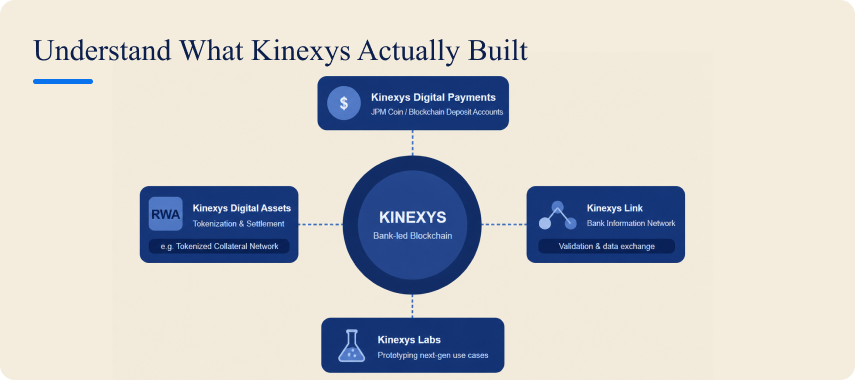
One mistake many businesses make is comparing Kinexys with normal crypto payment platforms. The Kinexys blockchain platform helps banks and enterprises move money faster using a tokenized deposit platform instead of relying completely on traditional settlement systems.
What makes this important is the scale. Institutions are not really pushing small retail payments. Instead they are focusing on treasury workflows, outward and inward transfers, and large value settlements that require speed, visibility , and reliability.
For companies trying to build a platform like Kinexys, the goal should not be “launch a token.” The focus should be building reliable digital asset infrastructure that financial institutions can comfortably integrate into daily operations.
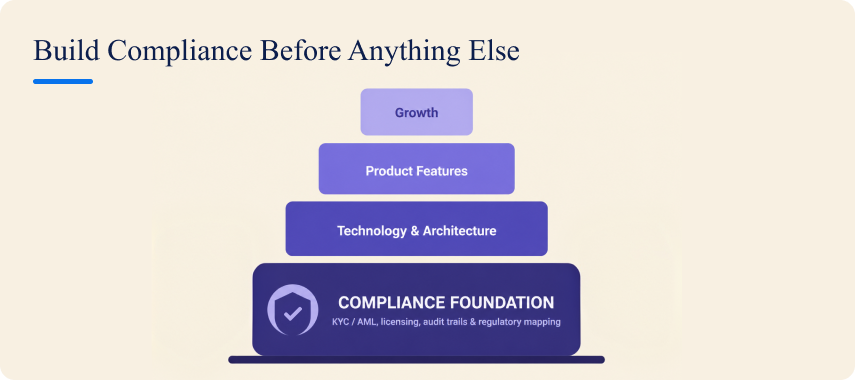
Most blockchain startups think development comes first. In institutional finance, compliance comes first.
Banks will not touch a platform that lacks proper KYC, AML monitoring, reporting systems, and transaction controls. That’s why compliance becomes one of the biggest parts of Kinexys platform development.
Before the platform even goes live, businesses usually need:
KYC verification systems
AML transaction monitoring
Audit logs
Risk controls
Regulatory reporting tools
Identity management systems
This becomes even more important for businesses exploring how to build institutional tokenization platform solutions because regulations around asset tokenization are becoming stricter every year.
It also explains why the cost to build blockchain payment platform infrastructure is often much higher than people initially expect.
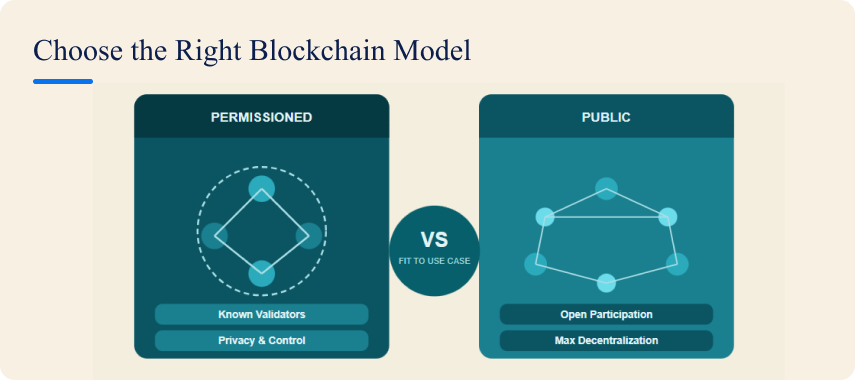
A lot of retail crypto projects run on public blockchains where anyone can participate. Institutional finance works differently.
The Kinexys blockchain platform uses a permissioned blockchain for financial institutions, that is only open, to authorized participants.
That matters for a few reasons:
Banks need transaction privacy
Regulators need visibility
Institutions need governance controls
Enterprise systems need predictable performance
For businesses looking to build a platform like Kinexys, this decision affects almost everything later — scalability, compliance, transaction speed, and even security architecture.
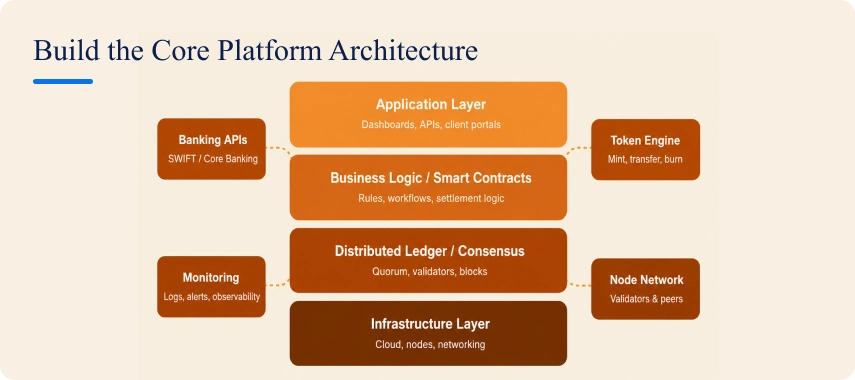
From the outside, platforms like Kinexys may look simple. Behind the scenes, they are extremely layered systems.
A proper institutional blockchain payment platform usually combines:
| Layer | What It Handles |
|---|---|
| Real-time transaction processing | |
| Digital asset issuance | |
| Automated financial workflows | |
| AML, KYC, monitoring | |
| Banking and external systems |
This entire tokenization platform architecture works together to support real-time institutional settlement.
For companies planning to build a platform like Kinexys, the challenge is not just blockchain development. The challenge is making every layer work together smoothly without affecting compliance or transaction speed.
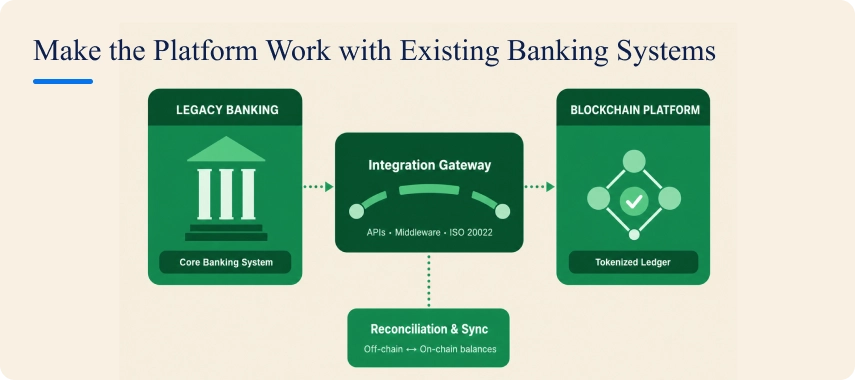
One reason Kinexys gained attention is because it works alongside traditional banking systems instead of trying to replace them completely.
That means the platform connects with:
SWIFT networks
Core banking software
Treasury systems
Enterprise payment infrastructure
Compliance monitoring tools
This interoperability is a huge part of modern real-time gross settlement blockchain systems because institutions still rely heavily on existing financial infrastructure.
If you want to build a platform like Kinexys, the blockchain side is only half the work. The real challenge is connecting blockchain systems with traditional finance environments in a way that feels seamless for institutions.
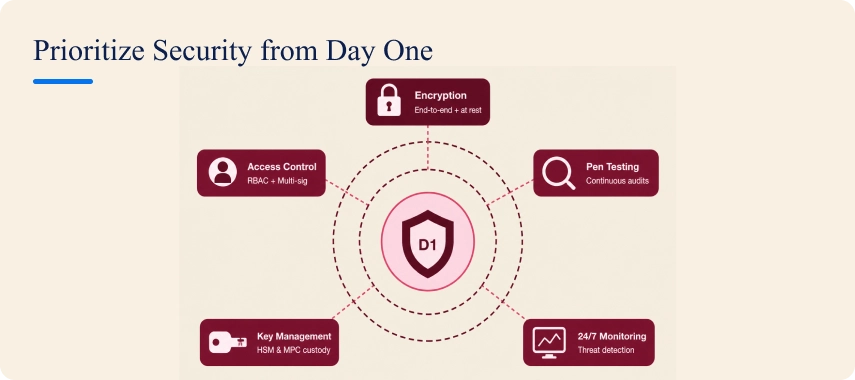
Security is one area where financial institutions refuse to compromise.
A small vulnerability that might be manageable in a retail crypto app becomes a massive problem in enterprise finance. That’s why institutional platforms invest heavily in security, audits, and transaction controls.
A strong platform usually includes:
Multi-signature approvals
Encrypted wallet systems
Role-based permissions
Immutable audit trails
Continuous monitoring systems
A reliable smart contract audit financial platform is also critical because smart contracts directly control settlement and treasury operations.
Some businesses go looking for a ready-made Kinexys clone script, hoping for a swifter deployment, but enterprise-grade infrastructure is rarely that easy. Getting a trusted institutional ecosystem in place requires careful planning, compliance expertise, banking integrations, and a long run security architecture.
That is really what separates enterprise blockchain infrastructure from normal crypto applications.
Build a Secure Institutional Blockchain Platform
Launch a scalable institutional blockchain payment platform with enterprise-grade security, compliance infrastructure, and real-time settlement capabilities tailored for modern financial institutions.
Banks and financial institutions are slowly moving away from the older settlement setups that can take hours, and sometimes even days, just to get transactions done. Cross-border payments are still costly, treasury operations still feel disconnected, and many institutions keep leaning on systems that were never actually designed for real time finance.
That is, exactly, why more companies are now looking to build a platform like Kinexys.
The biggest reason behind the success of the Kinexys blockchain platform is actually straightforward: it solves operational headaches for institutions. Instead of treating blockchain as a speculative gimmick, Kinexys uses it in a practical way, to make payments quicker, help liquidity move with less friction, and simplify settlement between financial institutions.
This is creating a growing demand for:
Faster institutional settlement systems
Enterprise digital asset infrastructure
Scalable institutional blockchain payment platform solutions
Tokenized deposit platform ecosystems
Secure real-time gross settlement blockchain networks
Another reason this market is growing quickly is the increase of asset tokenization. Financial institutions are getting more comfortable with tokenized holdings, because they help efficiency and lower settlement friction. At the same time, enterprises are looking into how to build institutional tokenization platforms that can back big, large-scale financial operations while staying secure.
Companies that build something in the spirit of Kinexys are pushing into a space where demand is already rising across banking, payments, treasury management, and corporate finance, in general. Here are some of the benefits.
Institutions can handle payments way faster than before, in comparison with older banking rails, especially for cross border transfers.
Funds can move more efficiently between accounts, regions, and institutions without depending heavily on banking cut-off timings.
Automation reduces manual settlement work, reconciliation delays, and unnecessary intermediaries.
A well-designed tokenization platform architecture gives institutions better visibility into transactions and settlement activity.
Using a permissioned blockchain for financial institutions gives organizations stronger control over access, compliance, and transaction monitoring.
Although banks are leading adoption, the market is expanding much further.
| Industry | Opportunity |
|---|---|
| Settlement and treasury systems | |
| Cross-border payment infrastructure | |
| Tokenized investment platforms | |
| Liquidity and cash management | |
| Blockchain settlement networks |
As adoption increases, institutions are also focusing heavily on compliance and security. That is why enterprise-grade systems such as smart contract audit financial platform infrastructure are becoming an important part of modern blockchain ecosystems.
Some businesses at first look for a Kinexys clone script to launch sooner, but institutional finance will usually want much deeper infrastructure planning. The firms that really make it here will be the ones building reliable, secure, and scalable setups that institutions can actually rely on for everyday financial operations.
Businesses that build a platform like Kinexys are not limited to a single revenue stream. Because these platforms function as institutional financial infrastructure, the revenue side typically shows up from many enterprise services running within the ecosystem.
The Kinexys blockchain platform model is important because, in real practice, institutions can be willing to pay for faster settlement, secure infrastructure, treasury automation, and dependable transaction processing.
Here are some of the most common revenue opportunities.
This is one of the primary revenue models for any institutional blockchain payment platform.
Businesses can charge fees for:
Cross-border transactions
Real-time settlements
Treasury transfers
Institutional payment processing
Tokenized asset transfers
As transaction volume increases, settlement fees can become a major recurring revenue source.
Some enterprises prefer using ready-made blockchain infrastructure instead of building everything internally. Companies that build a platform like Kinexys can license their platform to banks, fintech firms, and enterprise financial institutions.
This may include:
White-label platform licensing
API infrastructure access
Treasury management systems
This model works especially well for businesses offering scalable digital asset infrastructure.
The demand for asset tokenization is growing rapidly across banking, real estate, funds, and enterprise finance.
Platforms can generate revenue through:
Asset issuance fees
Token management services
Custody support
Compliance verification
Smart contract deployment
Businesses exploring how to build institutional tokenization platform solutions often see tokenization services as one of the biggest long-term opportunities.
Many enterprise clients prefer subscription-based pricing for blockchain infrastructure and treasury tools.
This may include:
Monthly platform access
Compliance monitoring
Analytics dashboards
Treasury automation tools
Enterprise reporting systems
A scalable tokenized deposit platform can create steady recurring revenue by leaning on long term enterprise agreements.
Institutional finance depends heavily on trust and compliance. That creates additional revenue opportunities around security infrastructure and regulatory support.
This includes:
AML and KYC solutions
Audit reporting tools
Risk monitoring systems
Enterprise-grade smart contract audit services
As regulations keep evolving, businesses that provide compliance ready infrastructure will have a strong advantage.
One of the biggest strengths of the Kinexys blockchain platform model is interoperability with traditional financial systems.
Businesses can monetize:
Banking API integrations
SWIFT connectivity
Treasury integrations
Cross-chain settlement infrastructure
Enterprise payment connectivity
For companies planning to build a platform like Kinexys, long-term revenue usually comes from becoming part of the institution’s daily financial operations rather than depending only on transaction fees.
That is what makes this market attractive. Once financial institutions integrate blockchain infrastructure into treasury and settlement workflows, the relationship often becomes long-term and operationally critical.
The cost to build a platform like Kinexys can vary a lot depending on what kind of platform you want to launch. Some businesses begin with a ready-made solution so they can reach the market sooner, while others go for custom development to craft a fully scalable institutional blockchain payment platform from the ground up.
In many situations, the schedule and budget come down to things like compliance obligations, banking integrations, blockchain infrastructure, security architecture and the general level of complexity in the platform.
Businesses that want faster deployment usually start with a Kinexys clone script, or a pre-built blockchain framework. This is often used for MVP launches, pilot programs, or early-stage enterprise testing, and it tends to move things along quickly.
A basic clone-based platform can usually be launched within:
Timeline: 2 to 4 weeks
Estimated Cost: $15,000 – $50,000+
This setup may include:>
Basic tokenized deposit platform functionality
Wallet and transaction modules
Admin dashboard
Settlement workflows
Basic compliance support
Smart contract integration
Clone-based development tends to be more affordable because most of the key foundation is already pre built. A lot of companies go that way to try the market first, before they step into full scale enterprise infrastructure.
For businesses planning long-term Kinexys platform development, custom development is usually the better option. This allows companies to build infrastructure tailored to enterprise finance, treasury operations, compliance, and institutional settlement workflows.
A custom-built platform typically takes:
Timeline: 4 to 12 weeks
Estimated Cost: $50,000 – $250,000
The cost increases based on:
Banking integrations
SWIFT connectivity
Enterprise security systems
Compliance infrastructure
Cross-border settlement features
Multi-chain interoperability
Advanced tokenization platform architecture
Several factors directly affect the overall cost to build blockchain payment platform infrastructure.
Institutional finance requires:
KYC and AML systems
Audit-ready infrastructure
Role-based permissions
Enterprise-grade encryption
Smart contract audit financial platform integration
Building a permissioned blockchain for financial institutions involves additional architecture, governance systems, and enterprise deployment layers.
Connecting with:
Core banking systems
Treasury platforms
Payment gateways
SWIFT infrastructure
can significantly increase development complexity.
Platforms supporting:
Asset tokenization
Enterprise treasury management
Cross-border settlement
Institutional DeFi
Large-scale digital asset infrastructure
usually require higher investment and longer development timelines.
For businesses that are planning to build a platform like Kinexys, and starting with a scalable MVP, then later expanding the underlying infrastructure is usually the most practical step. It helps keep the first outlay lower so the platform can continue evolving depending on organizational needs , and what the market is actually adopting.
The rise of platforms like Kinexys shows how quickly institutional finance is moving toward blockchain-powered infrastructure. For companies planning to build a platform like Kinexys, success depends on much more than blockchain development alone. The real value comes from combining secure infrastructure, compliance systems, enterprise integrations, and scalable settlement architecture into one reliable ecosystem.
As demand for asset tokenization, enterprise digital asset infrastructure, and real-time financial networks continues to grow, businesses entering this market early will have a strong advantage in the next phase of institutional finance evolution.
At BlockchainX, we help businesses build secure, scalable, and enterprise-ready blockchain platforms tailored for institutional finance, tokenization, and next-generation payment infrastructure.
Start Your Kinexys-Like Platform Development
Planning to build a platform like Kinexys? Work with BlockchainX to develop secure blockchain infrastructure for treasury management, tokenized deposits, and institutional settlement systems.

Our expert team is professionally well-equipped with hands-on experience as a blockchain development company. Connect with us; at BlockchainX, we curate your desired sustainable solution!
Follow us on