Table of Contents
How to Build a Platform Like RealT: The Complete Guide
Listen to the Audio :
Key Takeaways
Building a RealT-like platform requires blockchain technology, smart contracts, and regulatory compliance.
Fractional ownership enables investors to buy and own shares of real estate assets.
Smart contracts automate ownership transfers, rental payouts, and investor management.
Compliance, security, and transparency are critical for long-term success.
Secondary marketplaces improve token liquidity and investor engagement.
Revenue can come from tokenization fees, trading commissions, and property management services.
Development timelines typically range from 2–4 weeks for an MVP and 8–12 weeks for a custom solution.
Sustainable growth depends on investor trust, property performance, and platform transparency.
The rise of the RealT platform has completely changed how people think about property investing. Today, businesses are looking to understand how to build a platform like RealT and enter one of the fastest-growing sectors in blockchain and real estate.
This growing demand is accelerating the expansion of the real estate tokenization platform market worldwide. According to recent reports, the global asset tokenization market could grow from nearly $3 trillion in 2026 to over $18.74 trillion by 2031.
Meanwhile, big institutional adoption of tokenized assets like BlackRock, Franklin Templeton, JPMorgan, and more are actively putting capital into tokenized real-world assets which shows that blockchain patterns are getting more mainstream attention. As interest in dividing property ownership for fractional property investment keeps rising, companies exploring how to build a platform like RealT are increasingly choosing RealT clone script solutions and more advanced real estate tokenization platform development strategies, so they can launch scalable investment ecosystems.
What is RealT?
RealT is a blockchain powered real estate investment platform that lets users obtain fractional ownership in rental properties through tokenized shares, but not the usual way. You do not need to buy the whole place, which is often priced at many hundreds of thousands of dollars.
Instead of acquiring an entire property worth that big amount, investors can purchase tiny portions, represented by blockchain tokens. This makes fractional real estate investment more accessible, and simplifies the process through the RealT blockchain ecosystem. For businesses exploring how to build a platform like RealT, this model has become one of the strongest examples of modern property tokenization platform innovation.
These tokens typically provide:
Fractional ownership rights
Rental income distribution
Governance participation (in some cases)
Secondary market trading access
| Traditional Real Estate | Blockchain Infrastructure |
|---|---|
| Smart Contracts | |
| Security Tokens | |
| Automated Stablecoin Payouts | |
| Token Transfer | |
| KYC/AML Automation |
This model became one of the earliest successful examples of a scalable real estate tokenization platform.
Ready to Build Your Own Real Estate Tokenization Platform?
Launch a secure and compliant RealT-like platform with advanced blockchain technology, smart contracts, and fractional ownership features. Contact our experts today.
Contact Our ExpertsHow RealT Platform Works
✦
✦
✦
✦
How RealT Platform Works
Step 1
Property Acquisition
& Legal Setup
& Legal Setup
Step 2
Property
Tokenization
Tokenization
Step 4
Token Purchase
& Ownership Tracking
& Ownership Tracking
Step 3
Investor
Verification
Verification
Step 5
Rental Income
Distribution
Distribution
Step 6
Secondary
Marketplace Trading
Marketplace Trading
The RealT platform works by converting real-world rental properties into blockchain-based digital assets that investors can buy in smaller portions. Instead of purchasing an entire building, users can invest in tokenized property shares and earn rental income based on their ownership percentage. This simplified investment structure is one of the main reasons businesses researching how to build a platform like RealT are entering the market.
A typical real estate tokenization platform operates through the following process:
1. Property Acquisition and Legal Setup
The platform first acquires or partners with income-generating properties such as:
Residential homes
Apartment units
Commercial buildings
Vacation rental properties
Each property is then placed under a legal entity like an LLC or SPV to ensure proper ownership management and regulatory compliance. This step is a core part of successful real estate tokenization platform development.
2. Property Tokenization
After legal structuring, the property is divided into blockchain-based digital tokens. These tokens represent fractional ownership of the real estate asset.
For example:
Property Value: $200,000
Total Tokens Issued: 20,000
Price Per Token: $10
This process makes fractional property investment much more affordable for retail investors.
3. Investor Verification
Before investing, users must complete compliance procedures such as:
KYC verification
AML screening
Identity authentication
Wallet integration
These checks help the property tokenization platform remain legally compliant while securing investor transactions.
4. Token Purchase and Ownership Tracking
After it is approved, the investors can purchase those property tokens through crypto wallets or with other supported payment methods. The ownership log is kept secure on blockchain networks by smart contracts.
The RealT blockchain model helps improve:
Transparency
Security
Ownership tracking
Transaction automation
5. Rental Income Distribution
When tenants pay rent, the platform distributes rental income automatically to token holders based on their ownership percentage.
Most RealT tokenized real estate platforms use stablecoins like USDC for payouts because they offer:
Faster settlements
Lower transaction costs
Global accessibility
Automated payment distribution
This passive income model is one of the biggest reasons fractional real estate investment is gaining popularity worldwide.
6. Secondary Marketplace Trading
One major advantage of building a platform like RealT is liquidity. Investors are not always forced to hold tokens long-term. Instead, they can trade or sell property tokens through integrated secondary marketplaces.
This gives investors:
Faster exits
Improved liquidity
Flexible investment management
Better portfolio diversification
For businesses exploring how to build a platform like RealT, secondary trading functionality has become an essential feature rather than an optional add-on.
9 Key Steps to Build a Platform Like RealT
9 Key Steps to Build a Platform Like RealT
Essential building blocks for tokenized real estate
Building a successful real estate tokenization platform involves much more than launching a blockchain application. If you truly want to understand how to build a platform like RealT, you need to combine legal compliance, property management, investor trust, smart contract automation, and liquidity infrastructure into one complete ecosystem.
Here are the most important components that define a successful RealT platform development strategy.
Step 1: The Legal Foundation — Get This Wrong and Everything Fails
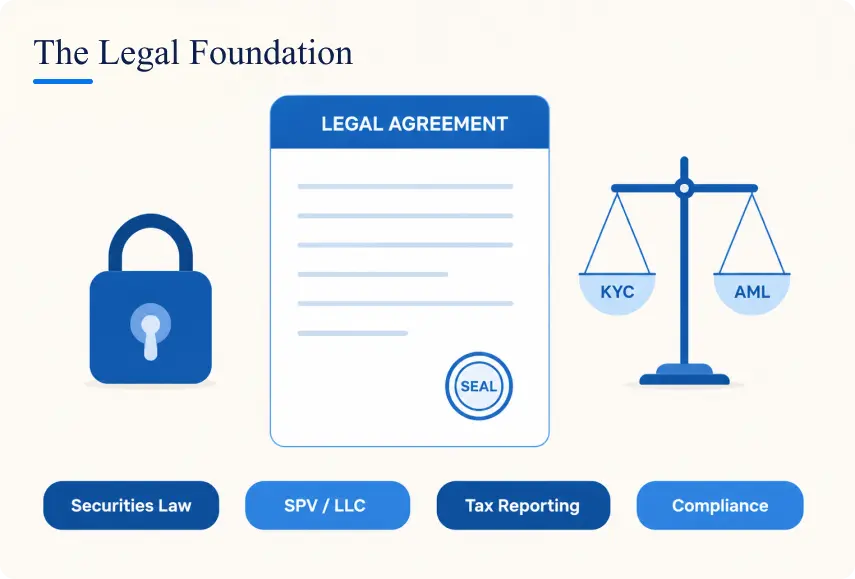
Legal structure is not just one part of the platform. It is the foundation of the entire business.
Any company researching how to build a platform like RealT must understand that tokenized real estate often falls under securities regulations in many jurisdictions.
Without proper compliance, even a technically perfect platform can face regulatory shutdowns.
The legal framework usually includes:
Property ownership structuring
Investor agreements
Securities compliance
KYC and AML procedures
Tax reporting
Jurisdiction-based restrictions
Most platforms place each property inside an SPV or LLC structure to separate liabilities and simplify investor ownership.
You also need clear legal documentation explaining:
What each token represents
Investor rights
Rental income entitlement
Exit conditions
Governance rules
For any serious real estate tokenization platform development project, legal planning should begin before coding starts.
Step 2: Blockchain Infrastructure — Choosing Your Technical Foundation
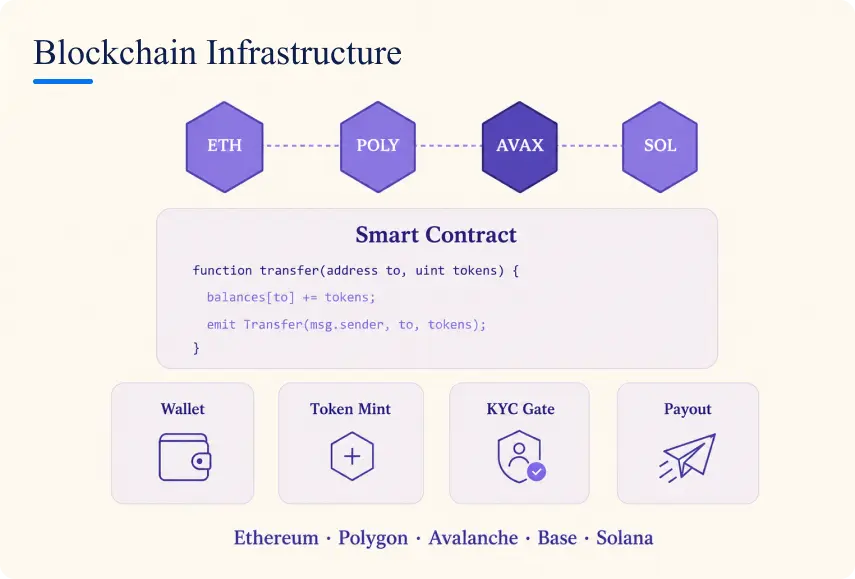
Picking the correct blockchain really influences scalability, the cost per transaction, reliability and investor experience, which is all linked together in practice.
Many organizations looking at how to build a platform like RealT end up preferring Ethereum-compatible environments, because the smart contract foundation there is mature, and there are compliance tools that are easy to lean on. Popular blockchain options include:
| Blockchain | Why Businesses Choose It |
|---|---|
| Strong Security and Ecosystem | |
| Lower Gas Fees and Scalability | |
| Faster Transaction Speeds | |
| Growing Adoption and Low Fees | |
| High Throughput Performance |
Your blockchain infrastructure must support:
Token issuance
Smart contract automation
Rental payout systems
Wallet integration
Investor whitelisting
Marketplace transactions
Smart contracts should also undergo independent security audits because investor confidence depends heavily on platform security.
Step 3: Platform Architecture — The Five Layers You Must Build
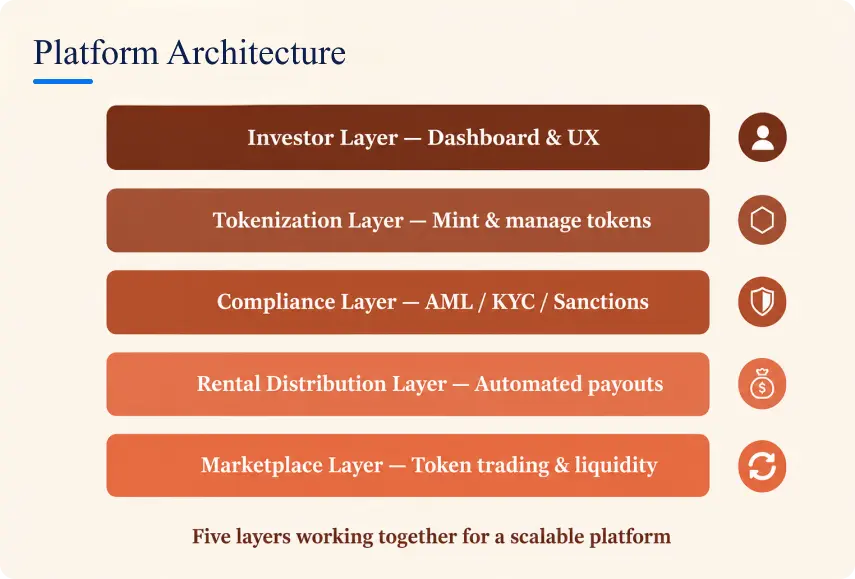
A scalable property tokenization platform requires multiple systems working together smoothly.
Most successful platforms are built using five major layers.
Investor Layer
This is the user-facing side of the platform.
It includes:
User registration
KYC verification
Wallet connectivity
Investor dashboard
Portfolio management
The experience must feel simple even for non-crypto users.
Tokenization Layer
This layer handles the conversion of real estate assets into blockchain tokens.
Core functions include:
Property onboarding
Token minting
Ownership allocation
Smart contract deployment
Compliance Layer
This system ensures all investor activity follows regulations.
It usually includes:
AML monitoring
Accreditation checks
Sanctions screening
Jurisdiction restrictions
Transaction monitoring
Rental Distribution Layer
This part automates rental income calculations and payouts.
It manages:
Revenue collection
Expense deductions
Stablecoin distribution
Yield reporting
Marketplace Layer
Liquidity is a major feature of the RealT blockchain model.
The marketplace layer allows:
Token trading
Peer-to-peer transactions
Secondary market listings
Ownership transfers
Without this layer, liquidity becomes limited.
Step 4: Rental Income Distribution — The Feature That Makes It Real
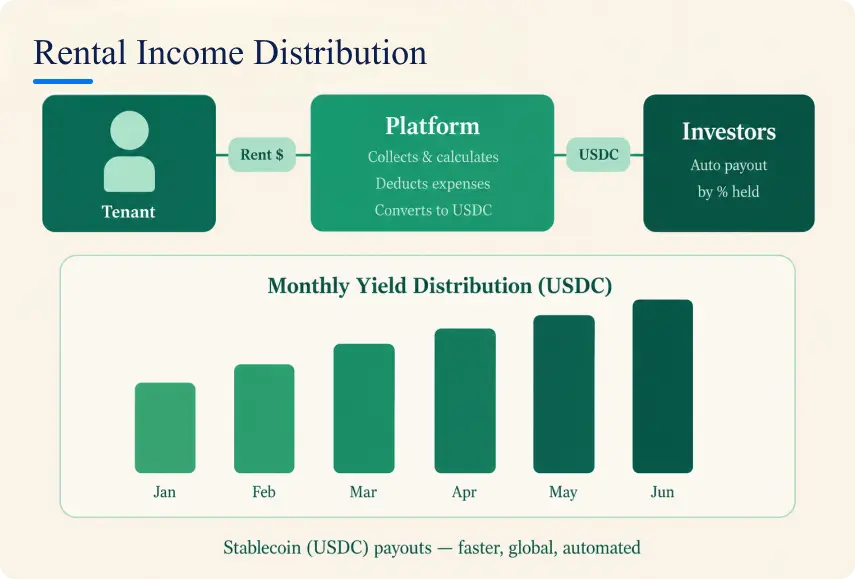
The rental distribution system is what separates tokenized real estate from purely speculative crypto projects.
If you are researching how to build a platform like RealT, this feature should be treated as a core operational priority.
A typical payout workflow includes:
1. Collecting rent from tenants
2. Deducting maintenance and operational expenses
3. Calculating investor yield
4. Converting payouts into stablecoins
5. Distributing rewards automatically
Most platforms use stablecoins like USDC because they provide:
Faster global transfers
Reduced banking friction
Predictable value stability
Automated settlement capabilities
Transparent payout tracking also improves investor trust significantly.
Step 5: Secondary Market — Solving the Liquidity Problem
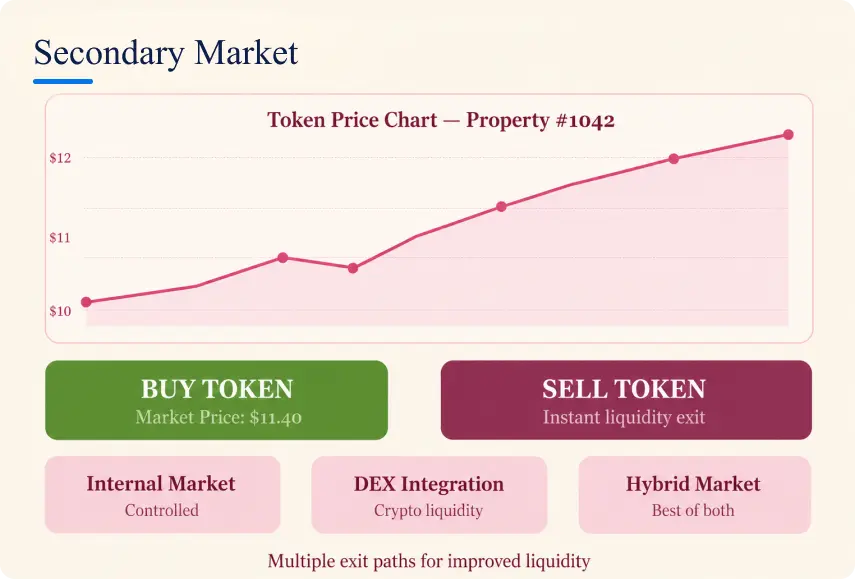
Liquidity is one of the biggest reasons investors are attracted to tokenized real estate.
Traditional property investments often lock investor capital for years. A real estate tokenization platform solves this by allowing token trading through secondary marketplaces.
This gives investors more flexibility to:
Exit investments faster
Rebalance portfolios
Trade ownership shares
Access partial liquidity
There are generally three approaches to marketplace design:
| Marketplace Model | Purpose |
|---|---|
| Controlled Trading Environment | |
| Broader Crypto Liquidity | |
| Compliance + Liquidity Balance |
Most companies learning how to build a platform like RealT eventually adopt hybrid marketplaces because they offer better regulatory control while maintaining investor flexibility.
Step 6: The Full Technology Stack
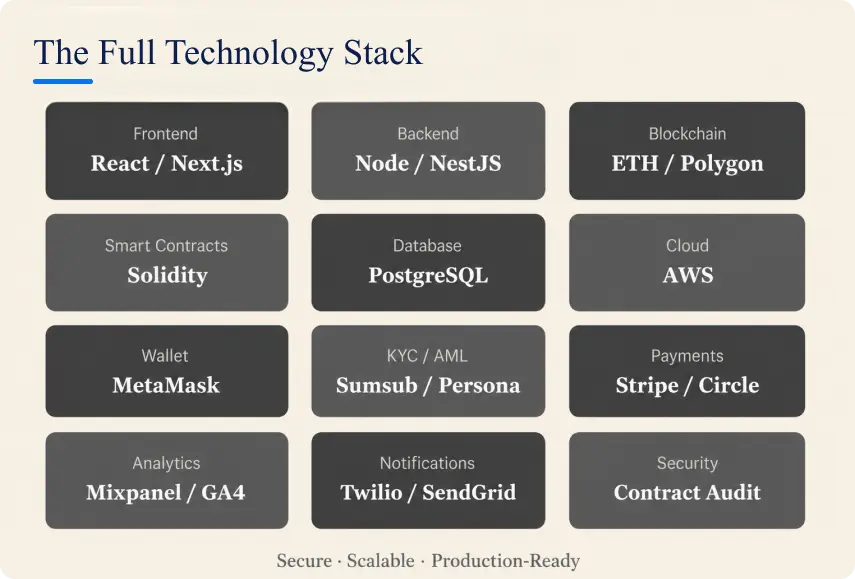
The tech choice also determines day to day platform speed, how well it scales, and even the continuing maintenance expenses, so it is worth thinking through early.
A modern RealT clone script or custom platform usually includes the following stack:
| Component | Recommended Stack |
|---|---|
| React, Next.js | |
| Node.js, NestJS | |
| Ethereum / Polygon | |
| Solidity | |
| PostgreSQL | |
| AWS | |
| WalletConnect, MetaMask | |
| Sumsub, Persona | |
| Stripe, Circle | |
| Mixpanel, GA4 | |
| Twilio, SendGrid |
The goal is not simply building fast. The goal is building a secure and scalable ecosystem that investors can trust long-term.
Step 7: Go-to-Market and Building Investor Trust
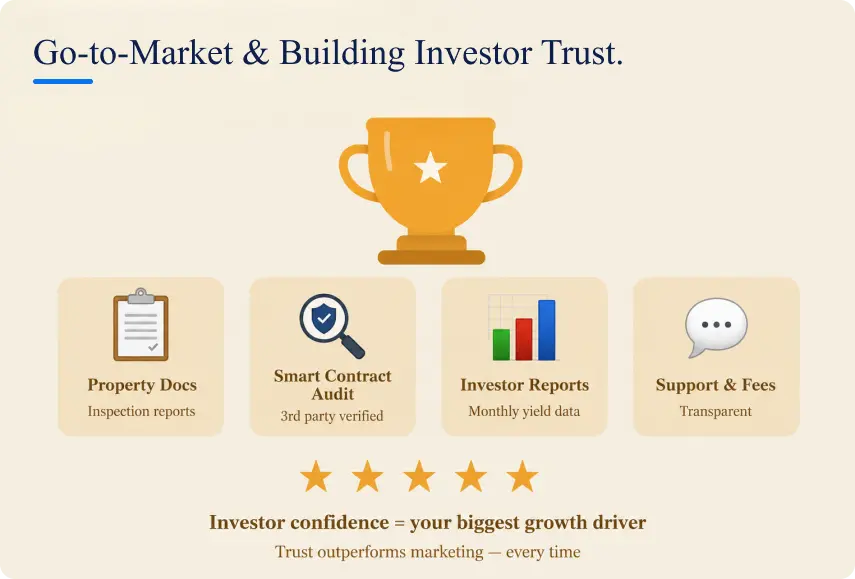
Many technically strong platforms fail because they ignore investor psychology.
Investors want transparency before they commit funds.
That means your platform should provide:
Property photos and documentation
Rental performance history
Inspection reports
Occupancy metrics
Yield calculations
Legal disclosures
For businesses exploring how to build a platform like RealT, credibility often becomes the biggest growth driver.
Some of the best trust-building strategies include:
Publishing regular investor reports
Conducting smart contract audits
Starting with high-quality properties
Maintaining responsive customer support
Providing transparent fee structures
A professional reputation attracts investors much faster than aggressive marketing campaigns.
Step 8: Revenue Model — How Platforms Like RealT Make Money
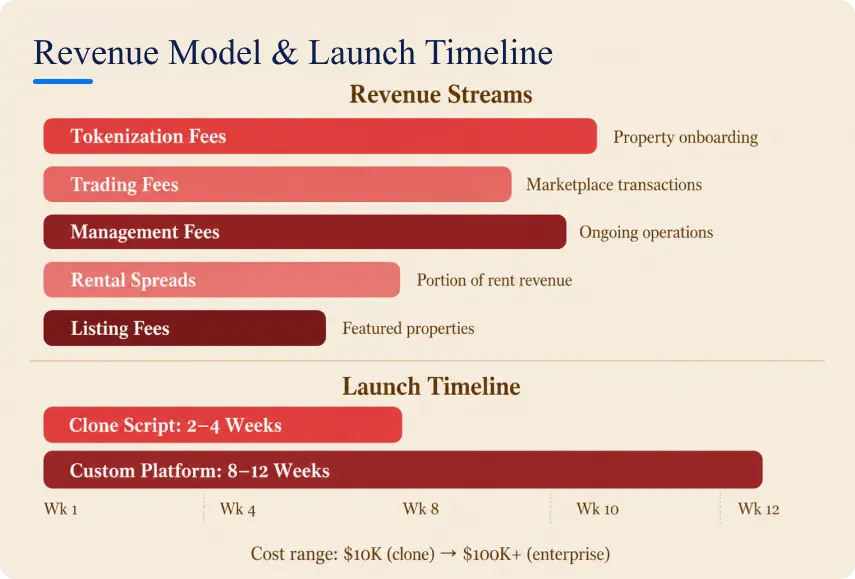
A successful real estate tokenization platform development strategy requires multiple revenue streams.
Most platforms generate revenue through:
| Revenue Source | Description |
|---|---|
| Charges for Onboarding Properties | |
| Fees From Marketplace Transactions | |
| Ongoing Operational Management | |
| Portion of Rental Revenue | |
| Featured Property Listings | |
| Investor Verification Services |
The most sustainable businesses combine recurring revenue with transaction-based revenue.
Step 9: Timeline to Build a Platform Like RealT
The launch timeline for a real estate tokenization platform depends a lot on whether you are building from scratch, or using a ready-made RealT clone script really.
If you are developing a fully customized platform with advanced compliance, marketplace features, and integrations, then the process can stretch to about 12 weeks for an MVP, depending on the scope and testing cycles. However, businesses using a pre-built RealT clone script can often launch much faster — sometimes within 2 to 4 weeks.
For companies researching how to build a platform like RealT, choosing between custom development and clone-based deployment usually depends on budget, scalability goals, and launch urgency.
Timeline for RealT Clone Script Deployment (2–4 Weeks)
A clone-based setup is the fastest way to enter the market because most core modules are already pre-built.
Typical Workflow
| Timeline | Development Stage |
|---|---|
| Week 1 | Platform Setup, Branding, UI Customization |
| Week 2 | Smart Contract Configuration and Wallet Integration |
| Week 3 | KYC/AML Integration and Testing |
| Week 4 | Security Checks, Deployment, and Launch |
This approach works best for startups that want:
Faster market entry
Lower development costs
Pre-built marketplace functionality
Faster investor onboarding
Basic tokenization capabilities
Many businesses prefer this route during the early stages of RealT platform development because it reduces technical complexity and shortens launch cycles significantly.
Timeline for Custom Real Estate Tokenization Platform Development (8–12 Weeks)
A custom-built platform requires more time because every module is developed specifically for your business model and compliance structure.
Typical Workflow
| Timeline | Development Stage |
|---|---|
| Weeks 1–2 | Business Planning and Legal Architecture |
| Weeks 3–4 | UI/UX Design and Frontend Development |
| Weeks 5–7 | Backend Infrastructure and Smart Contract Development |
| Weeks 8–9 | Payment Gateway, KYC, and Wallet Integration |
| Weeks 10–11 | Marketplace Development and Testing |
| Week 12 | Security Audits and Public Launch |
This model is better suited for businesses planning to build:
Enterprise-grade infrastructure
Multi-property ecosystems
Advanced investor dashboards
Custom liquidity systems
Large-scale property tokenization platform operations
When evaluating how to build a platform like RealT, the biggest advantage of custom development is flexibility. The platform can be tailored entirely around your regulatory requirements, investor flow, and revenue strategy.
What RealT Actually Built (and Why It Works)
One of the biggest mistakes founders make when learning how to build a platform like RealT is assuming the platform succeeded purely because of blockchain technology.
In reality, the platform became successful because it solved multiple real estate investing problems at the same time.
Traditional real estate investing usually comes with major barriers such as:
High property costs
Limited liquidity
Complex paperwork
Geographic restrictions
Slow ownership transfer
The RealT platform simplified this process by turning physical properties into digital investment assets that people could buy in smaller fractions.
What made the model attractive was the combination of:
Fractional ownership
Passive rental income
Global investor access
Blockchain transparency
Easier entry into property markets
Instead of requiring investors to purchase an entire building, the platform allowed users to participate in fractional real estate investment with smaller capital commitments.
This is the core reason the RealT tokenized real estate model gained traction so quickly.
Market Opportunity Behind Real Estate Tokenization
The market potential is massive.
Several forecasts estimate that tokenized real estate could eventually represent trillions of dollars in value over the next decade.
The growth is driven by:
Increased blockchain adoption
Institutional interest
Demand for alternative investments
Rising popularity of fractional property investment
Better regulatory clarity
Global investor participation
Tokenization is transforming real estate from a traditionally illiquid asset into a more accessible digital investment class. This shift is creating massive opportunities for businesses exploring how to build a platform like RealT.
That shift is attracting:
Crypto investors
Retail investors
Real estate firms
Asset managers
Institutional capital
For startups and enterprises, this creates a strong opportunity to launch modern investment ecosystems using RealT clone script solutions or custom real estate tokenization platform development models.
Cost to Build a Platform like RealT
The cost to build a platform like RealT depends on a few things, including the features you want, the blockchain infrastructure you choose, legal requirements that are in play, and how much customization is needed.
Businesses researching how to build a platform like RealT generally choose between two approaches:
Clone script deployment
Fully custom platform development
Estimated Development Cost
| Platform Scope | Estimated Cost |
|---|---|
| $10,000 – $30,000 | |
| $40,000 – $80,000 | |
| $100,000+ |
Major Cost Factors
Smart contract development
Legal compliance
Security audits
Marketplace infrastructure
Payment integrations
Cloud infrastructure
Property management systems
KYC/AML tooling
Compliance and legal structuring often become one of the largest expenses.
Future of Real Estate Tokenization Platform Development
The industry is moving beyond experimentation.
The next phase will likely include:
Institutional Participation
Large financial institutions are already putting money into tokenization infrastructure in a serious way.
Cross-Chain Asset Portability
Future platforms will support:
Multi-chain assets
Cross-chain liquidity
Interoperable marketplaces
AI-Driven Property Analytics
Advanced platforms may integrate:
Rental forecasting
Risk scoring
Tenant analytics
Automated valuation models
DeFi Integration
Tokenized properties may increasingly be used as:
Lending collateral
Yield-bearing assets
Treasury-backed instruments
Global Compliance Automation
Regulatory tooling will become a core differentiator as jurisdictions introduce clearer tokenization frameworks.
Conclusion
Understanding How to Build a Platform Like RealT is no longer just about following a blockchain trend. It is about creating a secure, compliant, and scalable ecosystem that makes fractional real estate investment more accessible for global investors.
A strong real estate tokenization platform should solve real investment problems instead of just following market hype. Businesses that focus on compliance, transparency, and investor confidence will have a much stronger position in this evolving market.
With growing experience in real estate tokenization platform development, companies like BlockchainX are helping businesses turn these ideas into scalable real-world platforms.


