The DeFi market is projected to see massive growth from $44.13 billion to $951.9 billion with a CAGR of 46.8% from 2025 to 2033.
DeFi Tokenization Platform Development
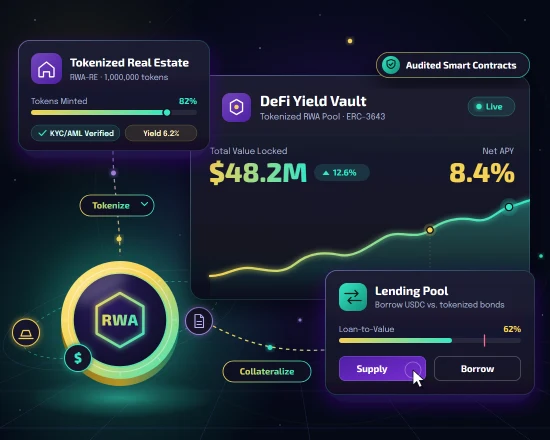
Locked-up capital, slow transfers, and limited investor access shouldn't hold your assets back. Our DeFi tokenization platform development services turn illiquid assets into compliant, tradable digital tokens built for institutional-grade security and effortless scale. Tap into a $44B market growing at 47% CAGR and start turning your assets into liquid, accessible tokens today.
250+
Global Clients
9+
Years of Experience
150+
Developers
80%
Repeat Businesses














What is DeFi Tokenization and Why Is It Important?
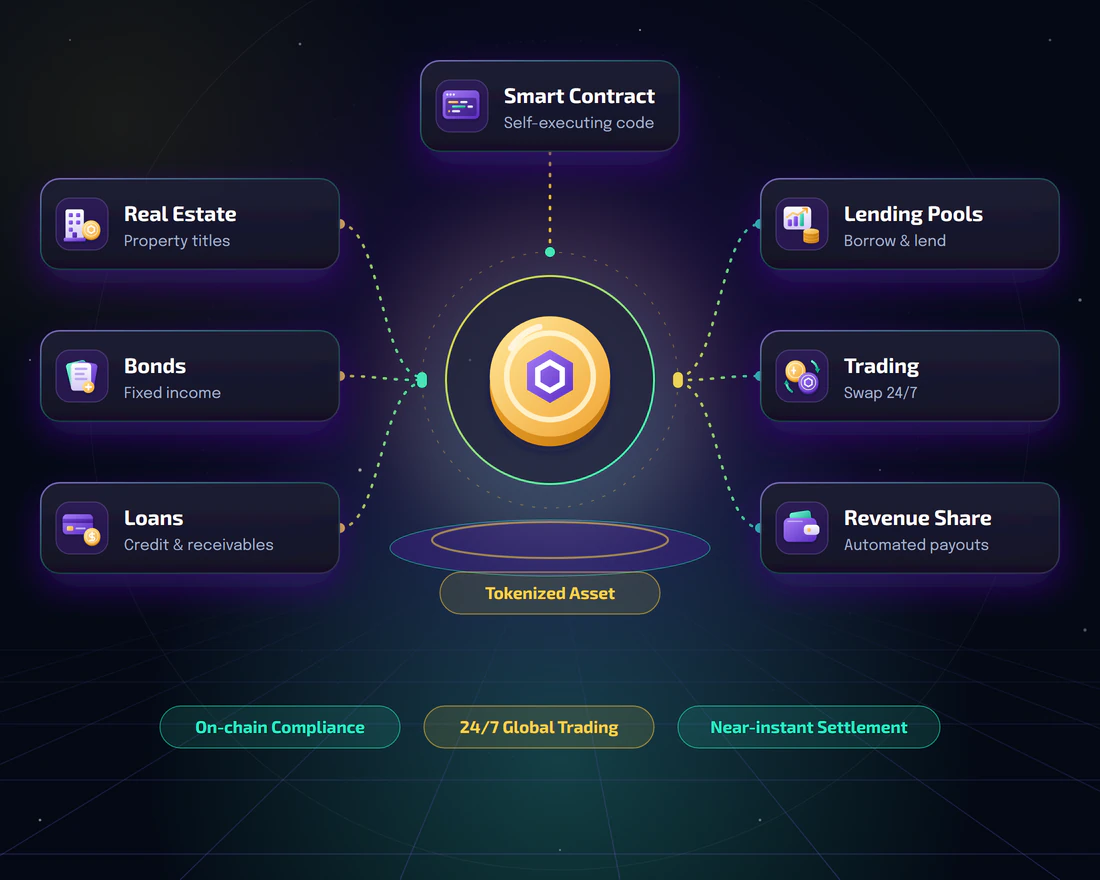
Decentralized finance tokenization is simple: it uses DeFi mechanisms to transform assets, like real estate, bonds, loans, and more, into smart contract tokens on decentralized blockchains. Compared to traditional centralized tokenization, DeFi asset tokenization removes central authorities and makes use of the self-executing codes so asset issuance, trading, and revenue distributions perform automatically. It also supports compliance directly on-chain, enabling around-the-clock trading across the world.
This change swaps down the old escrow agents, all the paperwork, and the slow manual trust steps with higher visibility, near-instant settlement, and wider global liquidity, unlocking cross-chain utility.
Why Now: The Market Case for DeFi Tokenization Opportunity
Deploying a decentralized finance tokenization platform in 2026 allows institutions to enter rapidly into the expanding global liquidity pools. The DeFi tokenization market is growing from a speculative activity into compliant infrastructure, making now the right time to build platforms, driven by regulatory clarity from frameworks like the GENIUS Act and MiCA.
With 26.43% in value, the global DeFi ecosystem capitalizes on the on-chain liquidity shift before 2031 with high compounding yields.
The lending and borrowing protocols share led with 27.33% of the decentralized finance market share in 2025, which is forecasted to expand through 2031.
BlockchainX’s Comprehensive DeFi Tokenization Development Services
From concept to deployment, we deliver full-stack DeFi asset tokenization services to make real-world illiquid assets more programmable, accessible & liquid.

DeFi Tokenization Platform Development
We build custom tokenization platforms that connect real-world assets with DeFi mechanisms, enabling automated token issuance, trading & revenue.
RWA Tokenization Development
Enable users to transform real-world assets into compliant smart contract digital tokens with automated transfers, fractional ownership & on-chain asset management.

Tokenized Asset Marketplace Development
Building high-end marketplaces where investors can buy, sell & trade tokenized assets peer-to-peer through secure, compliant digital infrastructure.

Tokenized Asset Lending & Borrowing
We help investors to lend or borrow against real-world tokenized assets through on-chain protocols as programmable financial instruments.

Tokenized Asset Collateralization
Exclusively convert your tokenized assets into verifiable, on-chain collateral for borrowing with smart contracts & manage valuation & liquidation conditions.

Tokenized Asset Smart Contract Development
Our developers build audited smart contracts for automated token issuance, ownership transfers, income distribution & redemption.

Real Estate Tokenization
Fractionalization of property ownership or economic rights into tradable digital assets to increase investor accessibility across borders.

Treasury Tokenization
Transforming government or corporate treasury instruments into yield-bearing, on-chain digital tokens with automated functionalities.
The RWA-DeFi Bridge: Where Real World Asset Tokenization Meets DeFi
Tokenizing a real-world asset is only the starting point. RWA DeFi tokenization connects the on-chain assets with decentralized financial infrastructure, enabling token holders to access liquidity, yield opportunities, and secondary markets in full swing. At BlockchainX, we build the bridge connecting RWA tokenization to live, asset-backed DeFi protocols.

Gold-Backed DeFi Collateral
Tokenized gold becomes usable as collateral within DeFi lending protocols, unlocking liquidity without liquidating the underlying asset.

Bond-Backed Yield Protocols
Plug tokenized bonds directly into yield protocols to let fixed-income instruments generate on-chain, composable returns.

Real Estate-Backed Lending Pools
Fractionalized real estate becomes loan-ready collateral, letting holders borrow against real estate without selling the underlying asset.

Private Credit Liquidity Pools
Tokenized private credit becomes tradable liquidity through tokenized DeFi pools, unlocking capital before maturity.
Our DeFi Tokenization Development Process From Concept to Mainnet
At BlockchainX we prioritize your DeFi to have a clear focus on security, performance, and capability. Let’s get to know it.
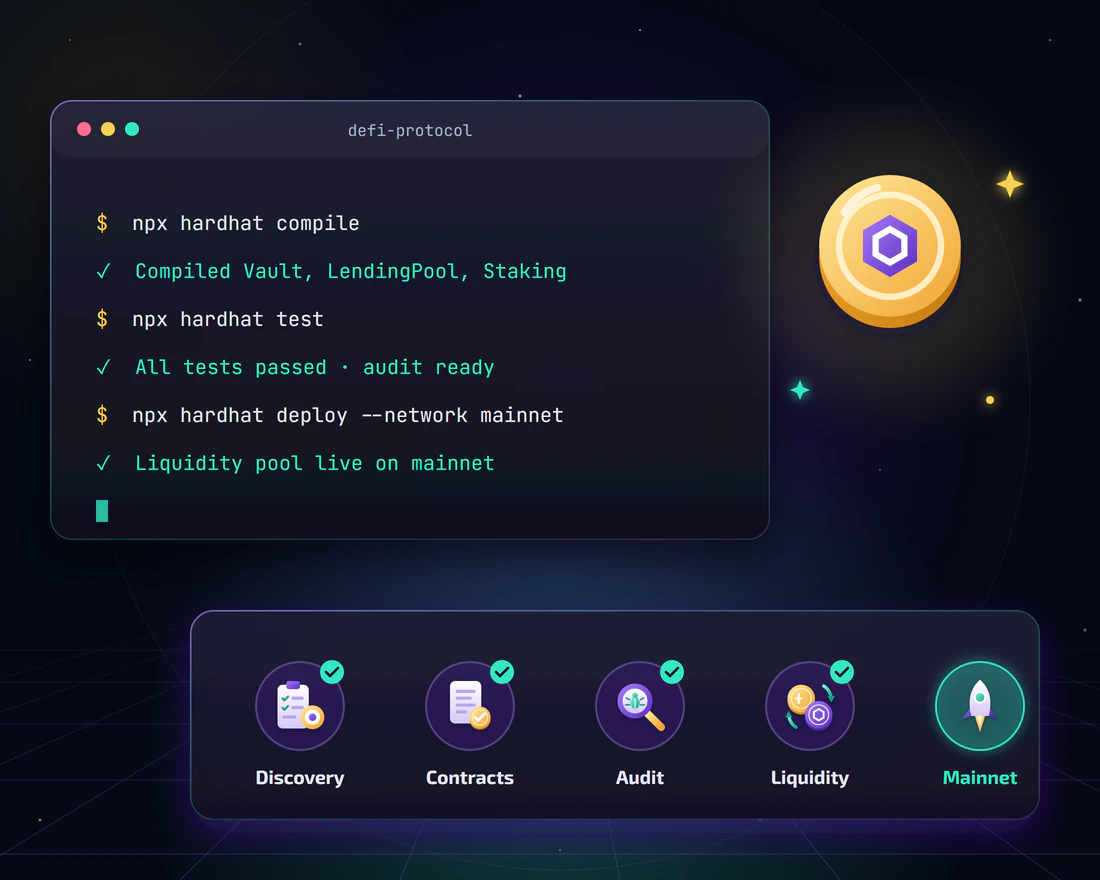
Step 1: Discovery & Tokenomics
We map your asset structure, target users & token utility, and define revenue mechanisms, incentives, governance logic & other technical requirements.
Step 2: Smart Contract Architecture
Our team designs the contract architecture, clearly defining token standards, access controls & the liquidity model, matched to your asset’s functional needs.
Step 3: Protocol Development
We build the entire protocol from asset issuance & staking to token transfers, lending & distribution, all integrated within your chosen blockchain network.
Step 4: Security Audit
Professional auditors review every protocol & contract to identify the possible risks, vulnerabilities & control issues.
Step 5: Testnet Deployment
We deploy the protocol under certain simulated real-world conditions on a testnet to verify its integration, performance & conditions before exposing it on the mainnet.
Step 6: Mainnet Launch
The complete DeFi platform is deployed to the mainnet, ensuring the contracts perform exactly as audited & monitored under live market conditions.
Step 7: Liquidity & Listing Support
We set the liquidity pools, list on exchanges, and integrate with wallets to ensure your token is all set to begin trading on marketplaces.
Step 8: Post-Launch Upgrades
We monitor your platforms for their performance and activity and provide continuous support with the necessary updates once released.
The Technology Behind Our DeFi Tokenization Development
We use a proven DeFi tokenization tech stack to create DeFi solutions, supporting high scalability with strong investor trust and confidence.
Blockchain Network
Ethereum, Solana, Polygon, BNB Chain

Smart Contract Languages
Solidity, Rust, Vyper

Token Standards
ERC-20, ERC-721, ERC-1400, ERC-3643

Oracle Infrastructure
Chainlink, Pyth Network, Band Protocol

Security & Standards
OpenZeppelin, Slither
Development Frameworks
Foundry, Hardhat, Truffle

Frontend & Backend
Node.js, React.js

Wallet Integration
WalletConnect, MetaMask

Database
MongoDB, PostgreSQL
What Makes BlockchainX a Trusted DeFi Tokenization Platform Development Partner
As a leading DeFi tokenization development company, BlockchainX has built beyond concepts for the past 9 years. From nickel-backed RWA tokens to agricultural ecosystems, our work across tokenization highlights the technical depth required to bring tokenized finance into production. Our custom solutions help startups, businesses, and entrepreneurs meet their demands from strategy to deployment with confidence.

Web3 Startup of the Year at ET Entrepreneur Awards 2026

Backs Bronze Sponsor at Unchained Summit Vietnam

Farmsent, an AgriTech Tokenization with 200K+ Verified Farmers

150+ Developers & 250+ Global Clients
Our Asset Tokenization Consultants
Talk to the people who'll actually architect and ship your platform — not account managers. Engineers and operators with real RWA-tokenization experience.


Ready to Tokenize Your Assets?
Tell us about your project. Our specialists will reply to your work email within 4 business hours with an honest assessment, timeline, and next steps.
Tokenization Platforms We've Built
Web3 platforms shipped — 9+ years of tokenization engineering for asset issuers, regulated exchanges, and real-world asset originators.
 London, UK
Archax — Finance & Fund Tokenization, RWA DEX
Problem: Institutional investors needed a UK-regulated venue to tokenize funds and trade real-world assets on a decentralized exchange.
Solution: Engineering for a London-based regulated platform covering fund tokenization, primary issuance, custody, and an RWA DEX for secondary trade.
Fund tokenizationRWA DEXFCA-regulated
Discuss a regulated fund tokenization + RWA DEX build →
 United States
Realworld — Luxury Asset Tokenization with Lending
Problem: High-value luxury assets — watches, wines, gems, gold, cars — sit illiquid; collectors cannot borrow against them or trade fractionally.
Solution: Tokenized luxury-asset platform with syndicate-pool lending, on-chain borrowing against physical collateral, and a secondary marketplace for transfers.
Luxury RWAsSyndicate pool lendingSecondary marketplace
Read the Realworld luxury RWA tokenization case study →
 Dubai, UAE
Farmsent — Agricultural Land & Green Energy Tokenization
Problem: Agricultural land and renewable-energy projects are capital-constrained and inaccessible to global investors, with limited transparency on yield and ownership.
Solution: Dubai-based tokenization platform for agricultural land and green-energy assets — fractional ownership, on-chain yield distribution, and a verified producer registry.
Agricultural landGreen energyDubai-based
Read the Farmsent agri-land and green-energy case study →
 Switzerland
SpecialMetalX — Nickel Metal Tokenization
Problem: Industrial nickel was locked in physical custody, illiquid for industrial buyers and inaccessible to global investors looking for commodity-backed exposure.
Solution: FINMA-compliant Swiss platform tokenizing audited nickel custody as ERC-1155 commodity tokens, with proof-of-reserve, a global trading marketplace, and on-demand physical asset redemption for verified holders.
Nickel metalERC-1155FINMA compliantPhysical redemption
Read the SpecialMetalX nickel tokenization case study →
FAQ
How much do DeFi tokenization development costs?
The exact development cost of a DeFi tokenization platform cannot be determined. But, somehow, it ranges from $15,000 to $150,000. This solely depends on asset complexity, blockchain selection, smart contract requirements, feature integrations, and the platform functionalities. However, the cost add-ons for additional security audits are based on its scope.
How long does it take to build a DeFi tokenization protocol?
A typical timeline to build a DeFi tokenization project is roughly 11-15 weeks. This includes planning the architecture, designing tokenomics, auditing smart contracts, and deployment.
Is DeFi tokenization regulated?
Yes, but the regulations vary by jurisdictions and respective token types. The utility tokens under DeFi generally face minimal oversight, whereas the security-like tokens heavily fall under the frameworks of U.S. securities law or the EU’s MiCA. Thus, the legal and compliance frameworks should be established as per the asset and the market potential.
What’s the difference between DeFi tokenization and RWA tokenization?
RWA tokenization is the transformation of an asset into a digital token, be it gold, real estate, or treasury. DeFi tokenization on the other hand, makes those digitized tokens run within decentralized protocols to support lending and staking.
Which is the best blockchain for DeFi tokenization development?
The popular network Ethereum remains the most widely used chain for its security and liquidity depth. BNB Chain, Polygon, and Solana are well known for their low transaction costs and high throughput. However, the right choice depends on the protocol’s specific requirements, asset type, and target users.


