Affordable Real Estate Tokenization Development: A Complete Guide
Listen to the Audio :
Real estate investment is entering a new digital phase where blockchain technology enables fractional ownership and global accessibility. Affordable Real Estate Tokenization Development represents a way of transforming property assets into digital tokens, allowing them to be purchased and traded over decentralized blockchain networks, thereby bypassing traditional barriers of capital lock-up and low liquidity in real estate markets.
Affordable real estate tokenization seems to be an upcoming trend that is supported by industry stats. The global market evaluation of real estate tokenization is USD 3.73 billion in 2025 and predicted to reach USD 23.99 billion in 2035, while the share is expected to grow at 21 percent CAGR. Nasdaq has joined hands with the crypto exchange Kraken to extend the capabilities of tokenizing financial assets, empowering the trade of traditional securities via blockchain.
This growing institutional interest is accelerating demand for real estate tokenization development solutions that are scalable, secure, and cost efficient. In this blog, we will explore affordable real estate tokenization development approaches, its key benefits, cost factors, and the future of tokenized property investment.
What Is Affordable Real Estate Tokenization Development?
Affordable real estate tokenization development is the process of creating blockchain based platforms that convert property ownership into digital tokens while keeping development and operational costs manageable. It enables fractional real estate investments where investors can purchase smaller shares of property assets. It makes property investment more accessible to global investors.
Understanding this concept requires looking into how affordable real estate tokenization development is put into practice.
Key Elements of Affordable Real Estate Tokenization Development
Conversion of property ownership into blockchain based digital tokens
The chance of fractional ownership for a number of investors
Smart contracts are in place to automate execution of transactions and adherence to compliance
Transparent ownership records stored on blockchain networks
Token trading capabilities that improve asset liquidity
Why Businesses Are Choosing Affordable Real Estate Tokenization Development
Startups and property developers are increasingly adopting affordable real estate tokenization development strategies to unlock new revenue streams.
Primary advantages for businesses include:
Lower platform development costs compared to traditional property marketplaces
Ability to raise capital through tokenized property offerings
Access to a global investor base
Improved liquidity for real estate assets
Digital asset management through blockchain technology
These advantages make affordable real estate tokenization an option that is favorable for companies looking to evolve in the realm of property investment.
Traditional Real Estate vs Tokenized Real Estate
The difference between traditional real estate investment and tokenized real estate highlights why affordable real estate tokenization development is gaining traction.
Investment Factor
Traditional Real Estate
Tokenized Real Estate
Minimum Investment
Very High
Fractional investment possible
Liquidity
Low liquidity
Higher liquidity through token trading
Transaction Time
Weeks or months
Faster digital transactions
Accessibility
Limited to local investors
Global investor participation
Ownership Records
Paper based documentation
Blockchain based digital records
Intermediaries
Multiple intermediaries
Reduced intermediaries
Increasing Demand from Investors for Affordable Real Estate Tokenization
Main contributing factors for investor interest are:
Ability to invest with smaller capital amounts
Portfolio diversification through multiple property assets
Access to international real estate opportunities
Increased liquidity through token trading marketplaces
Transparent blockchain based ownership records
With the affordable real estate tokenization development, small investors also may now participate in property markets that were previously pretty much accessible only to large institutions and wealthy individuals.
How Affordable Real Estate Tokenization Expands Global Investment Access
Tokenized real estate platforms eliminate many geographic limitations associated with traditional property investment. Investors from different regions can participate in real estate markets without complicated ownership procedures.
Benefits of global access include:
Borderless property investment opportunities
Simplified investor onboarding processes
Secure digital ownership records
Reduced dependency on local intermediaries
Faster settlement of investment transactions
One of the strongest growth drivers of Affordable Real Estate Tokenization platforms is this global accessibility.
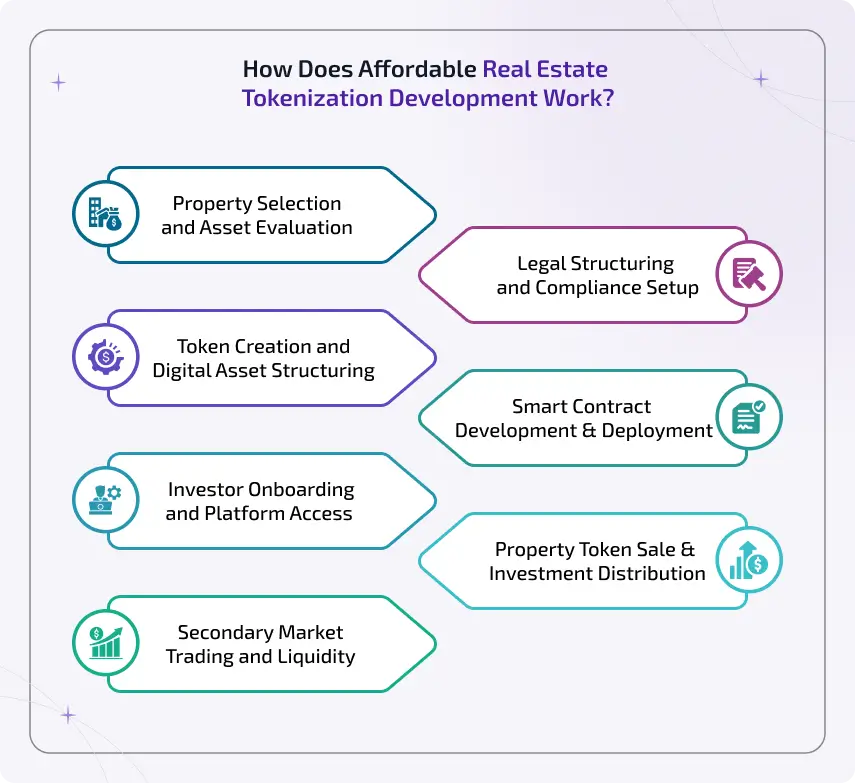
How Does Affordable Real Estate Tokenization Development Work?
Affordable real estate tokenization development involves the transformation of ownership of a real estate into digital tokens to represent the property in fractional shares. The process involves using smart contracts, blockchain infrastructure, and investor portals for property ownership and trading.
Through real estate tokenization development, property assets become digitally tradable while maintaining transparent ownership records. The process involves legal structuring, token creation, smart contract deployment, and investor participation.
Step 1: Property Selection and Asset Evaluation
The first stage of affordable real estate tokenization development involves selecting the property that will be tokenized. This step determines the value, legal structure, and investment potential of the asset.
Key activities include:
Identifying residential or commercial real estate assets
Conducting property valuation and financial analysis
Assessing rental income potential and asset performance
Preparing legal documentation for ownership verification
Structuring the asset for tokenization
Proper asset evaluation ensures that the affordable real estate tokenization platform offers reliable and high quality investment opportunities.
Step 2: Legal Structuring and Compliance Setup
Legal compliance is a critical component of real estate tokenization development. Any arrangement for asset ownership must respect the potential of digital ownership whilst in adherence with real estate and financial legislatures.
Important legal considerations include:
Creating a legal entity that represents the property asset
Defining investor ownership rights and token distribution
Ensuring regulatory compliance with property investment laws
Implementing investor protection frameworks
Integrating KYC and AML verification processes
With a properly documented legal structure, the transparent and cost-effective real estate tokenization is possible and also sets in investor confidence.
Step 3: Token Creation and Digital Asset Structuring
With the aid of the legal structure, the property is converted into digital tokens utilizing the blockchain technology. This is the core phase of affordable real estate tokenization development.
Token creation involves:
Defining the total number of tokens representing the property
Determining token value based on property valuation
Creating digital tokens that represent fractional ownership
Assigning token rights such as rental income participation
Structuring token supply and distribution models
These tokens act as digital representations of real estate ownership.
Example tokenization structure:
Property Value
Token Supply
Token Price
Ownership Representation
$5,000,000
5,000,000 Tokens
$1 per token
Fractional property ownership
This structure enables affordable real estate tokenization by allowing investors to purchase smaller ownership shares.
Step 4: Smart Contract Development and Deployment
Smart contracts are the backbone of real estate tokenization development. They automate ownership transfers, investment transactions, and revenue distribution.
Key smart contract functions include:
Token issuance and distribution
Ownership record management
Automated dividend or rental income distribution
Investor transaction verification
Compliance rule enforcement
Affordable real estate tokenization development reduces the operating costs and eliminates the traditional intermediaries by automating these processes.
Step 5: Investor Onboarding and Platform Access
When tokens are in existence, the access to the platform can ensue, and this is where the investors shall now start to invest in properties. In short, cost-efficient real estate tokenization is made possible by investor onboarding processes.
An onboarding process usually includes:
Investor account registration
Identity verification through KYC procedures
Wallet integration for token storage
Investment dashboard access
Property portfolio management tools
These features allow investors to easily participate in affordable real estate tokenization platforms.
Step 6: Property Token Sale and Investment Distribution
Once onboard is completed, it is the time when the platform initiates the token offering. Investors can purchase property tokens that represent shares of the asset.
The investment process generally includes:
Launching the token sale on the platform
Allowing investors to purchase tokens using digital assets or fiat
Allocating tokens to investor wallets
Recording ownership details on the blockchain
Updating investor dashboards in real time
This stage is where affordable real estate tokenization development enables property crowdfunding through blockchain technology.
Step 7: Secondary Market Trading and Liquidity
One of the most valuable advantages of real estate tokenization development is the ability to enable token trading in secondary markets. Investors can trade property tokens without selling the entire property.
Benefits of secondary trading include:
Improved asset liquidity
Faster investor exit opportunities
Dynamic property token pricing
Increased investor participation
Continuous market activity
Secondary markets strengthen the overall ecosystem of cost-effective real estate tokenization platforms.
Simplified Workflow of Affordable Real Estate Tokenization Development
The entire process of affordable real estate tokenization development can be summarized in a simple workflow.
Stage
Process
Asset Selection
Identify property for tokenization
Legal Structuring
Establish ownership and compliance framework
Token Creation
Convert property value into digital tokens
Smart Contract Deployment
Automate ownership and transactions
Investor Onboarding
Register and verify investors
Token Sale
Allow investors to purchase property tokens
Secondary Trading
Enable token trading for liquidity
These strategies help businesses to successfully implement affordable real estate tokenization platforms and lead to fractional real estate investment, enhanced liquidity, and global shares in real estate for investors.
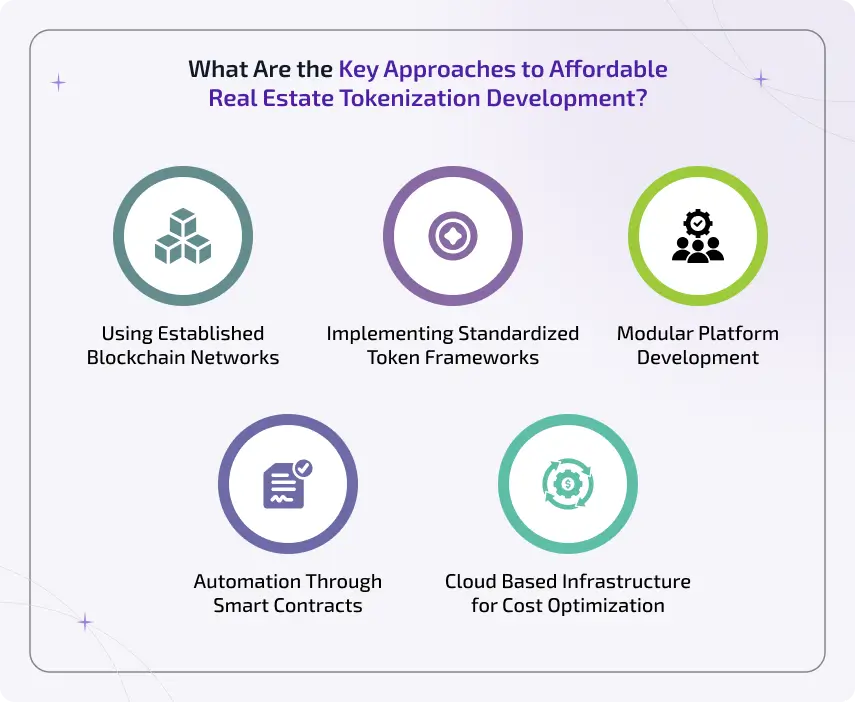
What Are the Key Approaches to Affordable Real Estate Tokenization Development?
Affordable Real Estate Tokenization development can be done through the strategic development approaches which effectively decrease the initial infrastructure costs but still keeping platform security and scalability in mind. Businesses concentrate on efficient blockchain architecture, modular platform design, and automated smart contracts.
These strategies make it easy for startups and property companies to exploit the benefits of cost-effective real estate tokenization. Organizations will be able to construct highly versatile platforms with affordable real estate tokenization development by adopting the right technical and operational strategies.
1. Using Established Blockchain Networks
One of the most effective strategies for affordable real estate tokenization development is selecting a mature blockchain ecosystem that provides secure infrastructure and developer tools.
Common blockchain networks used in real estate tokenization development include:
Ethereum for secure smart contract execution
Polygon for low transaction fees and faster processing
BNB Chain for scalable decentralized applications
Avalanche for high throughput tokenized asset platforms
The above blockchain ecosystems empower businesses by using cost-effective real estate tokenization without spending time and resources on a custom blockchain infrastructure.
2. Implementing Standardized Token Frameworks
Token standards simplify development and reduce technical complexity in affordable real estate tokenization development.
Common token standards include:
ERC3643 for regulated security token frameworks
ERC20 for fractional property ownership tokens
ERC721 for unique property assets
ERC1400 for security token compliance
ERC1155 for hybrid asset tokenization models
These real estate tokenization frameworks speed up development, which, in turn, are completely compatible with blockchain wallets and exchange platforms.
3. Modular Platform Development
Modular platform architecture is a significant approach in affordable real estate tokenization development. This allows developers to design and build systems that can scale and incorporate further feature sets over time.
The advantages of modular development include:
Reduced initial development cost
Faster platform launch timelines
Easy integration of new investment features
Scalable infrastructure for future growth
Flexible property token management systems
This approach supports cost-effective real estate tokenization while ensuring long term platform scalability.
4. Automation Through Smart Contracts
Smart contracts are essential for real estate tokenization development because they automate investment operations and reduce administrative costs.
Smart contract automation enables:
Automatic token issuance and ownership transfers
Transparent property investment records
Automated rental income distribution
Secure transaction verification
Reduced reliance on intermediaries
Automation significantly lowers operational expenses in affordable real estate tokenization development.
5. Cloud Based Infrastructure for Cost Optimization
Cloud infrastructure plays a major role in affordable real estate tokenization platforms because it reduces infrastructure maintenance costs.
Cloud based systems provide:
Scalable data storage
Secure application hosting
Real time platform monitoring
Global platform accessibility
Flexible computing resources
These capabilities will present a cost-effective real estate tokenization platform development empowering companies to capitalize on the mechanism without investing heavily on infrastructural investment.
Summary of Key Approaches for Affordable Real Estate Tokenization Development
Approach
Benefit for Platform Development
Blockchain Network Selection
Secure and scalable infrastructure
Standardized Token Frameworks
Faster development and interoperability
Modular Platform Architecture
Reduced development cost and flexibility
Smart Contract Automation
Automated property investment management
Cloud Infrastructure
Scalable and cost efficient platform operations
In combination with these different approaches, businesses can attain to employ an affordable real estate tokenization development. They can do this while maintaining their technical capabilities and ensuring investor protection.
Real World Platforms Using Real Estate Tokenization
Several digital investment platforms are already using real estate tokenization to transform how property ownership works. These platforms use blockchain infrastructure to divide real estate assets into digital tokens that investors can purchase. Their success displays the power behind affordable real estate tokenization development-a possibility to unlock property investment opportunities around the world.
Many companies are taking steps to develop real estate tokenization that would make property investments much more liquid and accessible, hence transparent for investors around the world.
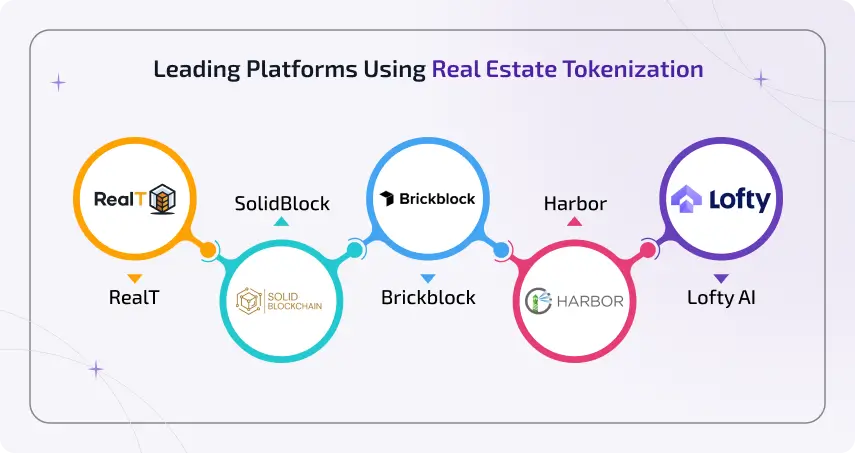
Leading Platforms Using Real Estate Tokenization
Various platforms have successfully adopted affordable real estate tokenization models to draw investors and raise funds from property assets.
Some of the most famous real estate platforms using tokens are:
RealT
SolidBlock
Brickblock
Harbor
Lofty AI
These platforms demonstrate how cost-effective real estate tokenization can simplify property ownership while enabling fractional investment models.
1. RealT
RealT is one of the earliest platforms focused on tokenized rental properties. It allows investors to purchase fractional shares of residential real estate through blockchain based tokens.
Key features of the RealT platform include:
Fractional ownership of rental properties
Automated rental income distribution
Blockchain based ownership records
Global investor participation
RealT showcases how affordable real estate tokenization development can be used to tokenize rental property portfolios.
2. SolidBlock
SolidBlock focuses on tokenizing large real estate projects such as hotels and commercial developments. The platform uses blockchain technology to simplify property fundraising.
Important capabilities of SolidBlock include:
Real estate security token offerings
Institutional property tokenization
Cross border investment opportunities
Smart contract based ownership management
SolidBlock demonstrates how real estate tokenization development can support large scale property investment platforms.
3. Brickblock
Brickblock created a platform designed to connect traditional real estate assets with blockchain based digital investment systems.
Key offerings include:
Tokenized property investment funds
Blockchain enabled asset management
Investor transparency through digital records
Real estate portfolio diversification
Brickblock represents a strong example of cost-effective real estate tokenization for property asset management.
4. Harbor
Harbor specializes in compliant security token platforms for real estate and other tokenized assets.
Platform highlights include:
Regulatory compliant digital securities
Blockchain based property ownership systems
Investor identity verification
Digital asset lifecycle management
Harbor illustrates how affordable real estate tokenization can operate within regulated financial frameworks.
5. Lofty AI
Lofty AI integrates artificial intelligence with tokenized real estate investment. The platform allows investors to purchase property shares and receive rental income.
Notable features include:
Tokenized property ownership
Automated property analytics
Instant rental income payouts
Fractional real estate investment
Lofty AI highlights how modern affordable real estate tokenization development can combine blockchain with advanced analytics.
Why These Platforms Validate Affordable Real Estate Tokenization Development
The success of these platforms shows that real estate tokenization development is no longer theoretical. Some of the important things you can learn from these platforms:
Tokenization can improve property investment accessibility
Blockchain enables transparent asset ownership
Fractional ownership attracts a wider investor base
Secondary trading improves real estate liquidity
Technology can reduce operational costs
These platforms are practical proof that if affordable real estate tokenization development is done properly, then it is capable of lifting traditional property markets up to digital investment ecosystems.
What Are the Cost Factors in Real Estate Tokenization Development?
The cost of building a property tokenization platform depends on several technical and operational elements. Businesses usually focus on core modules first to keep the investment manageable through affordable real estate tokenization development. With the right planning, companies can build cost-effective real estate tokenization platforms without unnecessary development expenses.
Most real estate tokenization development projects involve six major cost components that determine the overall platform budget. The simplest tokenization platform would cost from $30k to $100k, while an advanced platform offering compliance automation and advanced trading functions would cost $100k to $250k or higher based on the complexity.
Understanding the cost components helps companies design cost-effective real estate tokenization strategies without unnecessary spending.
Major Cost Components in Affordable Real Estate Tokenization Development
1. Blockchain Infrastructure
Blockchain infrastructure forms the technical backbone of real estate tokenization development. The choice of blockchain network, transaction architecture, and integration methods directly influence development scope.
Important elements include:
Selecting the blockchain network for token issuance
Integrating wallets for investor transactions
Enabling secure blockchain based ownership records
Setting up nodes and network connectivity
Ensuring compatibility with token standards
A well-structured blockchain layer supports secure and scalable affordable real estate tokenization development.
2. Smart Contract Development
Smart contracts automate many functions in affordable real estate tokenization platforms. They handle token creation, investor ownership records, and transaction verification without manual intervention.
Key smart contract considerations include:
Defining token ownership logic
Managing token minting and distribution
Enabling automated dividend or rental income distribution
Enforcing compliance rules through programmable logic
Supporting secure ownership transfer between investors
Smart contracts play a central role in building cost-effective real estate tokenization systems.
3. Platform Interface and Investor Dashboard
The platform interface allows investors to interact with tokenized property assets. A well-designed dashboard improves usability and encourages investor participation.
Important platform features include:
Investor registration and onboarding systems
Property listing pages and investment information
Portfolio management dashboards
Real time transaction tracking
Asset performance analytics
A smooth interface strengthens the overall experience of real estate tokenization development platforms.
4. Tokenization Engine and Asset Management
The tokenization engine converts real estate assets into digital tokens and manages fractional ownership distribution.
Core functionalities include:
Asset token creation and management
Defining token supply and ownership allocation
Maintaining digital ownership records
Enabling fractional property investment
Managing asset related financial distributions
This component ensures the functionality of affordable real estate tokenization development platforms.
5. Compliance and Regulatory Integration
Compliance is an important factor in real estate tokenization development, especially when dealing with investment platforms and digital securities.
Key compliance elements include:
Identity verification systems for investors
Regulatory compliance checks
Investor onboarding verification processes
Anti money laundering monitoring
Secure record keeping for regulatory reporting
Strong compliance frameworks help build trustworthy Affordable Real Estate Tokenization ecosystems.
6. Security and Platform Testing
Security is paramount to keeping digital assets safe and protecting investors' transactions. A Real Estate Tokenization Platform must, therefore, undergo elaborate checks before being launched with minimal costs.
Important security measures include:
Smart contract security testing
Vulnerability assessments and penetration testing
Platform performance evaluation
Secure deployment processes
Continuous monitoring for potential risks
Security strengthens investor confidence and ensures the long-term reliability of affordable real estate tokenization development platforms.
Future of Affordable Real Estate Tokenization
Tokenization in the real estate sector looks to be growing rapidly through the affordable real estate tokenization development. Consequently, it is obvious that a number of digital investment platforms are arising globally as businesses adopting cost-effective real estate tokenization.
Key trends shaping the future of Affordable Real Estate Tokenization include:
Increasing adoption of blockchain in property investment
Growth of fractional real estate ownership platforms
Higher participation from global investors
Integration of AI and data analytics in property evaluation
Expansion of digital real estate marketplaces
Improved liquidity through tokenized asset trading
With these developments, real estate tokenization development is expected to transform traditional property investment into a more accessible and technology driven ecosystem.
Real Estate Tokenization Development with BlockchainX
At BlockchainX, we provide affordable real estate tokenization development solutions specifically designed for scalability and efficiency. Our expertise in designing and creating secure real estate tokenization platforms allows the fractional ownership of properties and furthermore lets global investors participate.
We focus on delivering cost-effective real estate tokenization platforms that contain functionalities like automated smart contracts, investor dashboards, token management systems, and compliance integrations. We support the startups, property developers, and investment firms into a reliable tokenized-property ecosystem via vast experience in real-estate tokenization developments.
With in-depth focus, we are providing start-ups, property developers, and real estate investment firms with an opportunity to build trustworthy ecosystems for tokenized property. From platform architecture to deployment, BlockchainX offers support in end-to-end rwa tokenization development, aimed at enabling businesses to establish innovative affordable real estate tokenization platforms in a secure and scalable way, ready to support the future of digital real estate investment.
Affordable real estate tokenization development is an innovative practice that can make the transformation in creating, owning, and managing the property investments. Fractional ownership, greater liquidity, and tapping into a wider global pool of investors are common benefits when companies convert real estate assets into digital tokens.
Affordable real estate tokenization provides more clear information, faster operation speed, and requires less dependence on mediators compared to the conventional real estate investment modalities. Both startups and institutional investors will display considerable increase in the demand for real estate tokenization development platforms with the evolution of blockchain technology.
Anyone who can adopt cost-effective real estate tokenization strategies that can raise funds on a new scale and set up a digital investment ecosystem to expand. With the increasing rate of adoption and innovation, affordable real estate tokenization development will play major roles in future real estate investment scenarios.
Get all the latest posts delivered straight to your inbox.
Get In Touch
Our expert team is professionally well-equipped with hands-on experience as a blockchain development company. Connect with us; at BlockchainX, we curate your desired sustainable solution!