Global Clients
Years of Experience
Developers
Repeat Businesses















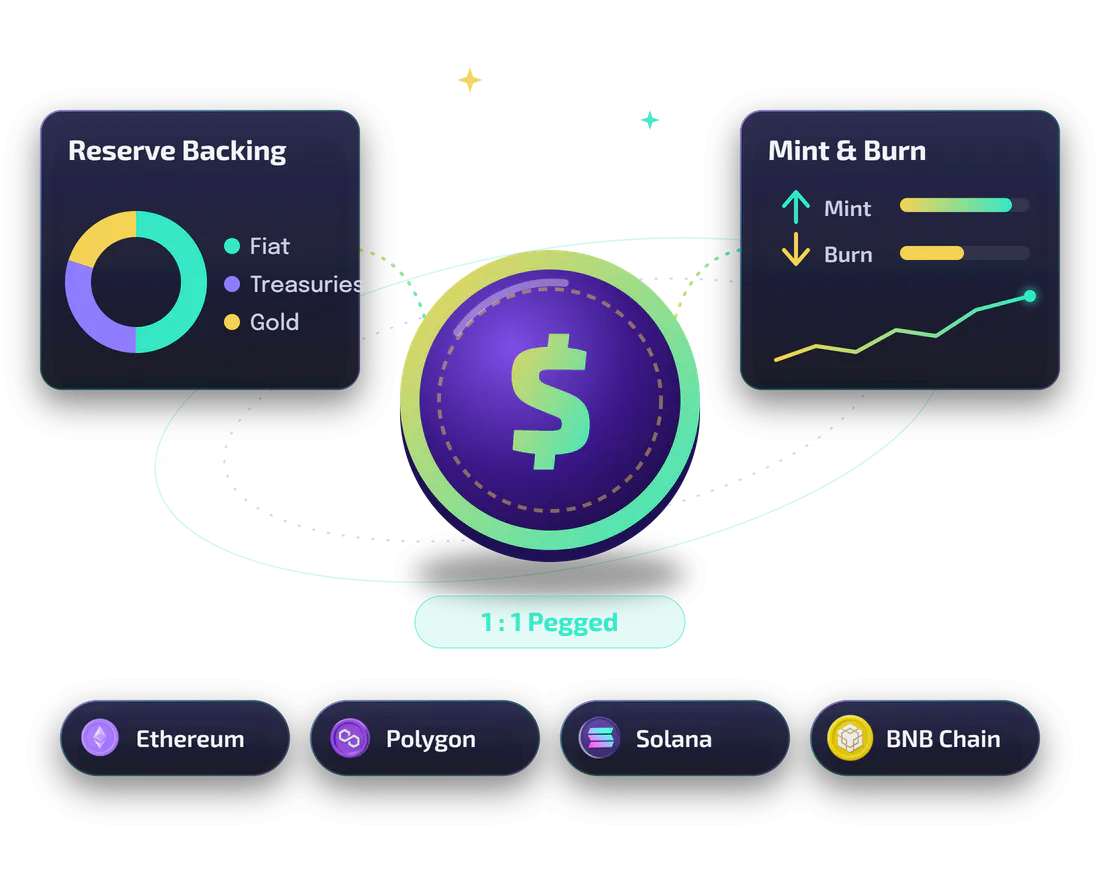
Digital economies are moving fast, where a currency is in need to hold crypto from everyday use without keeping up the volatility. Stablecoins here are becoming the core foundation, with a market growth from $5 billion in 2020 to $323 billion by May 2020.
A successful decentralized stablecoin takes more than developing a token. It needs the right model, collateral logic, and ecosystem strategies to build infrastructures with high scalability. At BlockchainX, we design and deliver systems as a one-connected team for fintechs, startups, and enterprises, so there’s no chance it misses out on any factors. Our stablecoins together bring a stable value, reduced volatility, and unlocked utility across diverse financial markets.

We create strategic stablecoins from tokenomics to smart contracts, tailored to your asset models, operational goals & platform activity.

Get strategic guidance across collateral models, tokenomics, compliance & market fit to choose the right architecture before you deploy a single line of code.

We connect your stablecoin across leading cryptocurrency wallets & platforms, enhancing user experience, accessibility & usability from day one.

Our stablecoin development solution aims at marketing your custom coins globally through ICO or STO platforms with self-controlled access & supply.

We create clear white papers that outline the technical aspects of your stablecoin’s mechanics, aiming to attract investors & stakeholders.

Our team conducts rigorous smart contract audits & vulnerability tests to catch risks & ensure the safety of user funds within your stablecoin ecosystem.

Structured liquidity pools, treasuries, governance frameworks & admin controls that make your stablecoin decentralized & more responsive.

Our ongoing engagement strategies across all social channels build enhanced user trust, fostering strong & consistent communication.

These are digital currencies pegged to traditional currencies like EUR or USDC, providing predictable value & trust for users handling multiple digital transactions.

Uses specialized techniques & advanced smart contract development techniques to manage the coins' rotation & stability without relying on external reserves.

Designed to be pegged with cryptocurrencies, facilitating the buying or selling of cryptos despite the market fluctuations in various financial activities.

Backed by assets such as silver, gold, commodities, or precious metals, these stablecoins bring real-world assets directly on-chain.

Blends the mechanisms of both fiat & crypto-backed stablecoins and provides flexible financial workflows & liquidity needs to balance decentralization.

We design stablecoins that are tied to the underlying assets like equity shares & real estate, offering a transparent & secure way to tokenize & trade them.

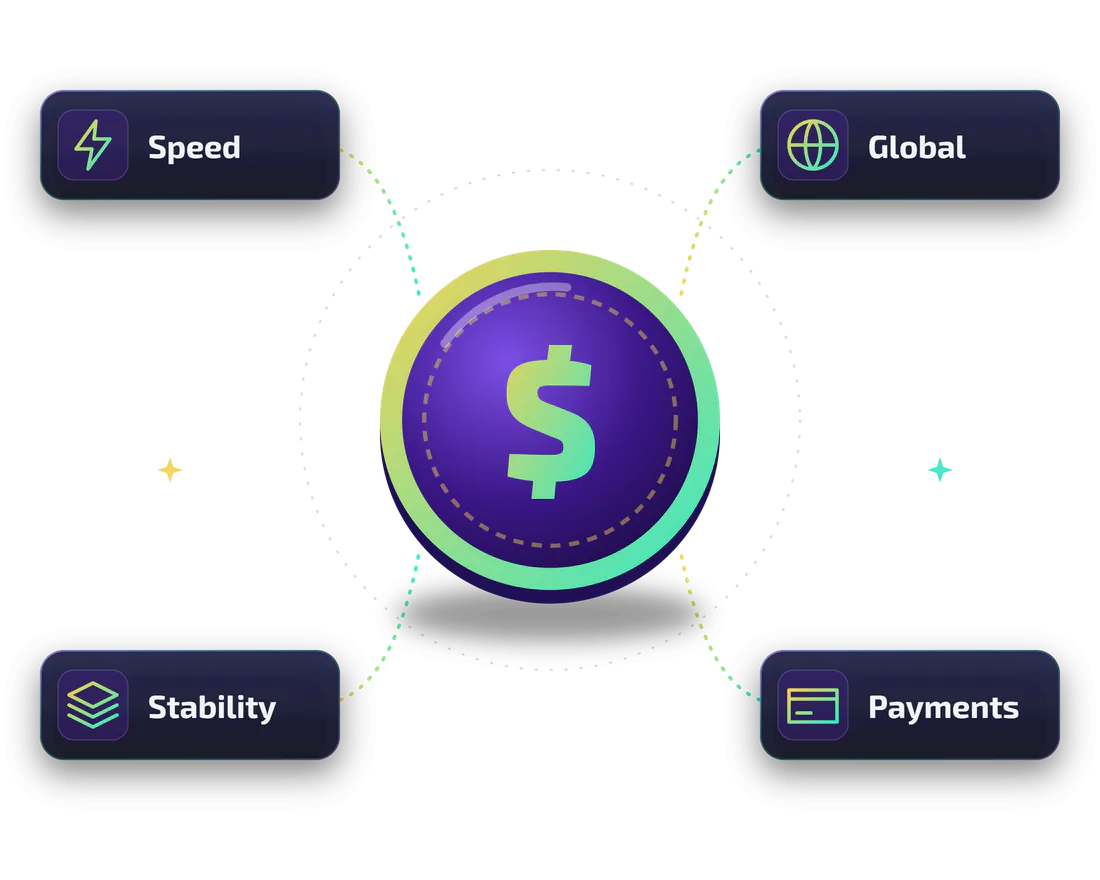
Stablecoins enable rapid cross-border payments with streamlined settlements.
Traditional transfers take days or cost high for international payments. Stablecoins here settle transactions in fractions of seconds or minutes, helping businesses or workers get rid of currency conversion delays.

Merchants accept global payments with instant and irreversible settlement with fewer fees.
Card payments, which come with chargeback risk and slow processing fees, are now replaced by stablecoins, which support instant settlements with no risk of customers reversing completed payments for the shipped goods.

DeFi protocols get a stable and reliable value to lend, borrow, and trade against.
Volatile crypto assets leave lending and trading at risk. This is replaced by stablecoins, which act as the base currency across decentralized protocols, enabling users to earn yields and collateralize loans without changing the principal value.

Businesses get a predictable way to hold the digital value without volatility issues.
Companies and businesses operating on-chain need a way to hold working capital without exposure to crypto market swings. Stablecoins let them manage digital treasuries and settle invoices with stable, predictable value.

Turning physical assets into digital value, stablecoins make tokenized assets tradable.
RWA assets, including gold, real estate, and commodities, gain liquidity once they are tokenized on-chain. Using stablecoins, buyers and sellers can transact against these assets without pricing them in volatile crypto.

Players earn, spend, and trade every in-game value without losing it to volatility.
When the in-game currency changes, play-to-earn economies lose their credibility. Stablecoins stand as a reliable place to store the value across reward systems and marketplaces for both players and the developers.
Not every project needs the same level of support and setup. Bringing the right expertise into your stablecoin project is a crucial task, which showcases how well the coin performs and gains popularity. At BlockchainX, our developers bring extensive expertise in developing or upgrading your project, providing you with a high opportunity to choose your own specifications and customizations.
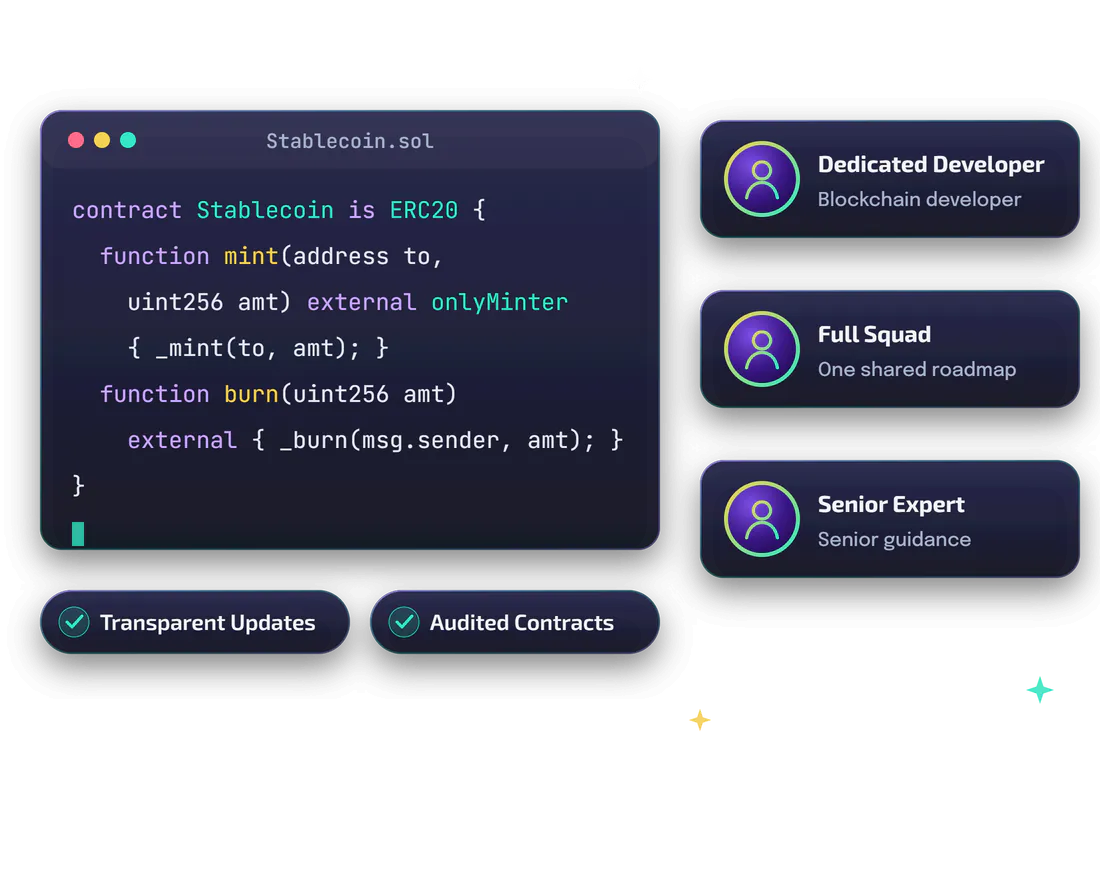
When you hire from us, whether a dedicated blockchain developer, a full squad working under one roadmap, or a senior expert, here’s what you can engage with:
Our structured process is built for accuracy, taking your stablecoin into accountability, from initial concept to live deployment. Here’s how it happens.
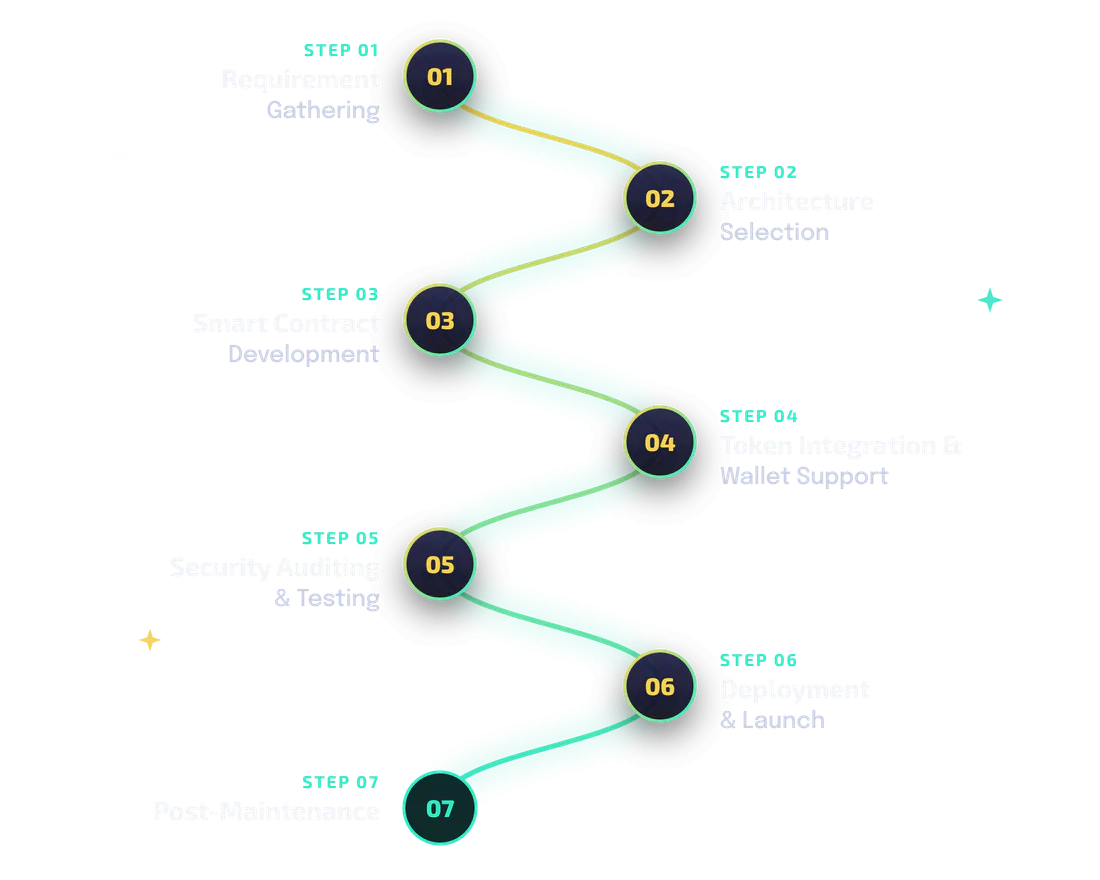
We closely review your target, goal & other requirements like liquidity level, settlement & regulatory needs to choose the best approach.
With a clear overview of the use case, we help you choose the best stablecoin model that maintains predictable pricing across platform activities.
Our team builds smart contracts to automate tasks like minting, burning, & issuance with high transparency & enhanced security.
We enable seamless adoption through the integration with leading wallets, exchanges & platforms for smooth digital transactions.
We test the entire system for reliability. Rigorous reviews & vulnerability checks are done to bring out the breaches before deployment.
We deploy your stablecoin across major blockchain networks like Ethereum or any other suitable networks to increase its performance & your engagement.
Followed by deployment, we monitor the platform continuously to find new upgrades, debugging & enhancements to make your coin run smoothly.
Ready to Move From Process to Production? Book a consultation with our experts to explore our services.
At BlockchainX, our stablecoin developer brings together the latest technologies to build a coin around your specific requirements for reliable performance.

Polygon
Layer 2 Network Low-fee, EVM-compatible scaling for high-volume stablecoin transfers.
Ethereum
Layer 1 Network The most widely used network for ERC-20 stablecoins and DeFi liquidity.
BNB Chain
EVM Network Fast, low-cost blocks with a large retail and exchange user base.
Solana
High-Throughput L1 Sub-second finality for payment-grade stablecoin transactions.
Rust
Contract Language Memory-safe language for Solana programs and high-performance logic.
Solidity
Contract Language The standard language for ERC-20 mint, burn and peg-control contracts.
Vyper
Contract Language Pythonic, security-focused EVM language that is easy to audit.
Web3.js
Web3 Library Connects the dApp front end to Ethereum nodes and contracts.
Ether.js
Web3 Library Lightweight library for wallet signing and contract calls.
Node.js
Backend Runtime Event-driven APIs for minting, redemption and reserve services.
Python
Backend Language Data pipelines, reporting and reserve reconciliation scripts.
Java
Backend Language Enterprise-grade services for banking and payment integrations.
Chainlink
Price & Reserve Feeds Decentralised price feeds and Proof of Reserve for peg checks.
Pyth
Price Oracle Low-latency, high-frequency market data from first-party sources.
WalletConnect
Wallet Protocol Connects hundreds of mobile and desktop wallets through one protocol.
MetaMask
Browser Wallet The most popular EVM wallet for signing stablecoin transactions.
Coinbase Wallet
Self-Custody Wallet Self-custody wallet with simple on-ramps for retail users.
OpenZeppelin
Contract Security Audited ERC-20, access-control and upgradeable contract libraries.
Slither
Static Analysis Finds vulnerabilities in Solidity code before audit and deployment.
Mocha
Testing Framework JavaScript test runner for contract and integration test suites.
Jest
Unit Testing Fast unit and snapshot tests for backend and front-end code.
Microsoft Azure
Cloud Platform Compliant enterprise cloud for nodes, APIs and databases.
AWS
Cloud Platform Scalable hosting, key management and managed blockchain nodes.
Google Cloud
Cloud Platform Managed infrastructure and analytics for on-chain data.
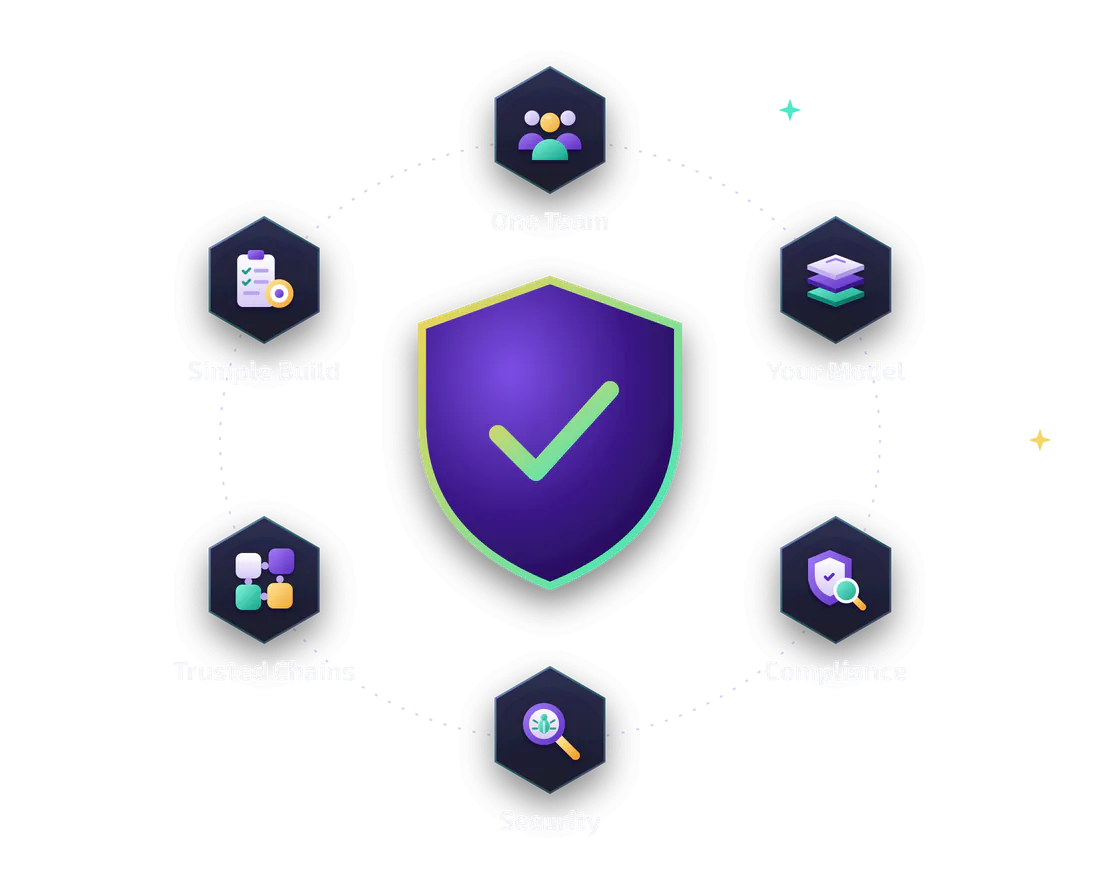
A stablecoin built around your business choices & not a fixed framework. We architect every stablecoin with your specific goals that can be adjusted without a full rebuild.

Regulatory expectations & transparency become the core foundation. Contract logics and compliance protocols are implemented from day one and not after the launch.

Fitting stablecoin into your existing system where it creates value. We build your coins with suitable wallets & exchanges and connect them to the trusted platforms.
Look for companies that provide extensive stablecoin development solutions across model selection and blockchain networks, and provide a strong and transparent secure practice with continuous post-launch support. A reliable partner should also have a portfolio of live projects.
We back several types. Common categories include commodity-backed, fiat-backed stablecoin, crypto-backed, algorithmic, and hybrid models. Each one keeps price stability through its own design and set of rules.
People use stablecoins for fast payments, sending money across borders, trading pairs, transaction settlement, and other finance tools built on blockchain.
The development timeline varies based on the coin model, blockchain network, feature integrations, and the auditing methods. This in total takes around a few weeks to a few months.
Yes, in most places. What you must meet depends on your country, the reserve setup, and the stablecoin design you pick. In general, fiat-backed options require more steps and more oversight than crypto collateral or algorithmic models.
The existing tokens can be migrated or restructured into a stablecoin model. This depends on the desired stablecoin structure that comes with redesigning contract logics and backing mechanisms.
Yes. Post-launch help is part of the work. It usually covers contract updates, checking performance, adding integrations, support with governance, fixing issues, and other improvements to keep the stablecoin stable and safe.
Start by looking at fees, available liquidity, speed, security, and how well it connects to other systems. You can compare chains on those points first. After that, practical factors often decide the final choice.
Include wider investor cross-network and maximum returns!
Follow us on


